Tape — A Durable-Execution Substrate for ADK Agents⌗
Design specification. Companion to "When the Orchestrator Isn't Code".
The treatise ends on a sentence: "Python will write the agent. Something else will run it." And on a smaller one, inside the ADK walk-through: "It needs a tape underneath the model that the regulator can read." This document is the design of that something-else, that tape. It is scoped to one agent framework — Google's Agent Development Kit (ADK) — and it is built as a separate system: a high-concurrency, low-latency server with a language-agnostic wire protocol, so that the agent can stay in Python (or Java, or Go, or TypeScript) while the runtime that survives the model is written in something that was built to survive.
0. The one-paragraph version⌗
Tape is a durable-execution server plus a set of thin SDKs. You point an ADK
agent at it with two lines — a plugins=[TapePlugin()] on the Runner and a
session_service=TapeSessionService(...) — and from then on every model call is
recorded, every tool call is made exactly-once-effective, every
human-or-event gate becomes a durable suspend-until-signal, every budget is a
piece of run state the loop checks before each step, and every irreversible
action carries a compensation handle so a later failure can unwind it. When
the agent process dies — deploy, crash, OOM — you re-invoke the run by its ADK
invocation_id; ADK re-drives the agent; Tape replays the recorded decisions
and short-circuits the confirmed effects so the run reconstructs itself and
continues from where it stopped, instead of re-deciding and re-acting. Tape adds
nothing to ADK — it rides only on extension points ADK already exposes (the
plugin system, custom SessionServices, LongRunningFunctionTool, and
invocation_id-based resume). Nothing in the agent's code changes; the tool
bodies stay plain.
1. From the treatise to this spec⌗
The treatise's running example is a treasury agent that, once a day, reads balances, prices the market, sweeps excess cash to a money-market fund, places a hedge, and posts the general ledger. It walks the example through four agent frameworks. The ADK version (treatise §II, "#### ADK") looks like this — the before:
def execute_sweep(account_id, currency, amount_minor, target_mmf, run_date,
                  rationale, tool_context) -> dict:
    # ① idempotency key — invocation_id helps when inputs would otherwise repeat
    key = hashlib.sha256(
        f"{run_date}:{account_id}:{amount_minor}:{target_mmf}".encode()).hexdigest()
    with side_journal() as j:
        # ② check the journal we built alongside the session
        if j.exists(key, status="confirmed"):
            return {"wire_id": j.wire_id(key)}
        # ③ write intent
        j.write(key, status="pending", account_id=account_id, amount_minor=amount_minor,
                target=target_mmf, rationale=rationale)
    # ④ the act
    try:
        wire_id = bank.wire(account_id, amount_minor, target_mmf, idempotency_key=key)
    except UnknownAck:
        with side_journal() as j: j.write(key, status="unknown")
        raise
    except Exception:
        with side_journal() as j: j.write(key, status="failed")
        raise
    # ⑤ session.state — what the model will read next turn
    tool_context.state[f"sweep:{account_id}:{run_date}"] = wire_id
    # ⑥ our journal — what survives the model
    with side_journal() as j: j.write(key, status="confirmed", wire_id=wire_id)
    # ⑦ compensation handle
    with comp_journal() as c:
        c.register(key, kind="reverse_wire",
                   payload={"wire_id": wire_id, "account": account_id})
    return {"wire_id": wire_id}
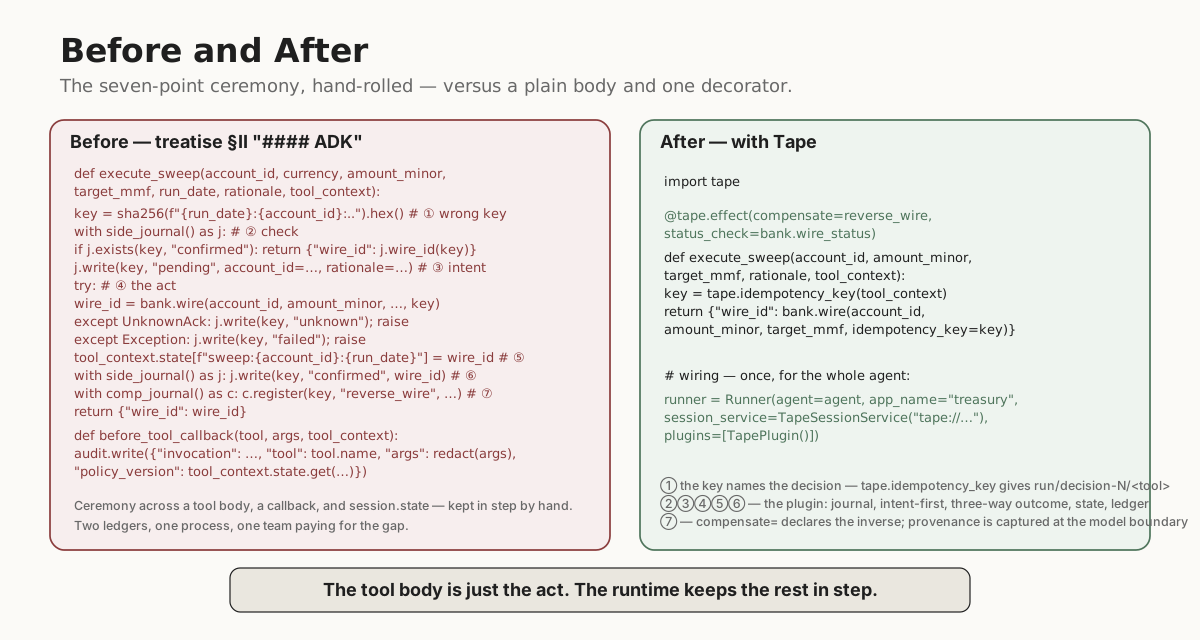
Seven points of ceremony — idempotency key, journal check, intent write, the act
with a three-way outcome, session-state write, journal write, compensation
register — hand-rolled, spread across a tool body and a callback and
session.state, and the developer keeps all three in step. The treatise's
verdict: "The session is durable. The session is the wrong shape for a ledger.
Two ledgers, one process, one team paying for the gap."
The treatise then names the six primitives of the ceiling (treatise §IX) — the things the framework layer should provide so the developer stops hand-rolling them:
| # | Primitive (treatise §IX) | What it means |
|---|---|---|
| ① | The idempotency key names the decision, not its inputs | Journal the model's instruction once; key the effect off the journal entry, not off values the model recomputes on replay. |
| ② | The third outcome — unknown — and the loop that resolves it |
A side effect can be neither confirmed nor failed; that's a first-class state, and a reconciler closes it by asking the counterparty. |
| ③ | The action gate is a signal, not a flag | "Wait for the CFO to approve" is a durable suspend-until-signal, not a polled boolean. |
| ④ | Budget is a workflow object, not a wrapper | Spend caps are run state the loop admits against before each step and charges after. |
| ⑤ | Adaptive compensation: the model writes the inverse | Each irreversible effect registers, at the time it commits, the handle that unwinds it; failure runs them LIFO. |
| ⑥ | Coordination through journaled state, not messages | Multi-agent hand-off is a written fact in a shared log, not an in-flight message. |
…and §XII names the conclusion: put a durable engine underneath. This spec is the design of an engine that provides ①–⑤ for ADK as table stakes (⑥, the multi-agent coordination entity, is a v2 RPC group — see §11), with the seventh point of ceremony — provenance — captured automatically because Tape sits on the model-call boundary where the request, the response, and the policy version all pass through.
The "after." With Tape,
execute_sweepis justbank.wire(...). The decorator@tape.effect(compensate=reverse_wire)declares the inverse; the plugin does everything else. See §8 for the side-by-side.
2. Principles⌗
These are the load-bearing decisions. Each maps to a piece of the treatise.
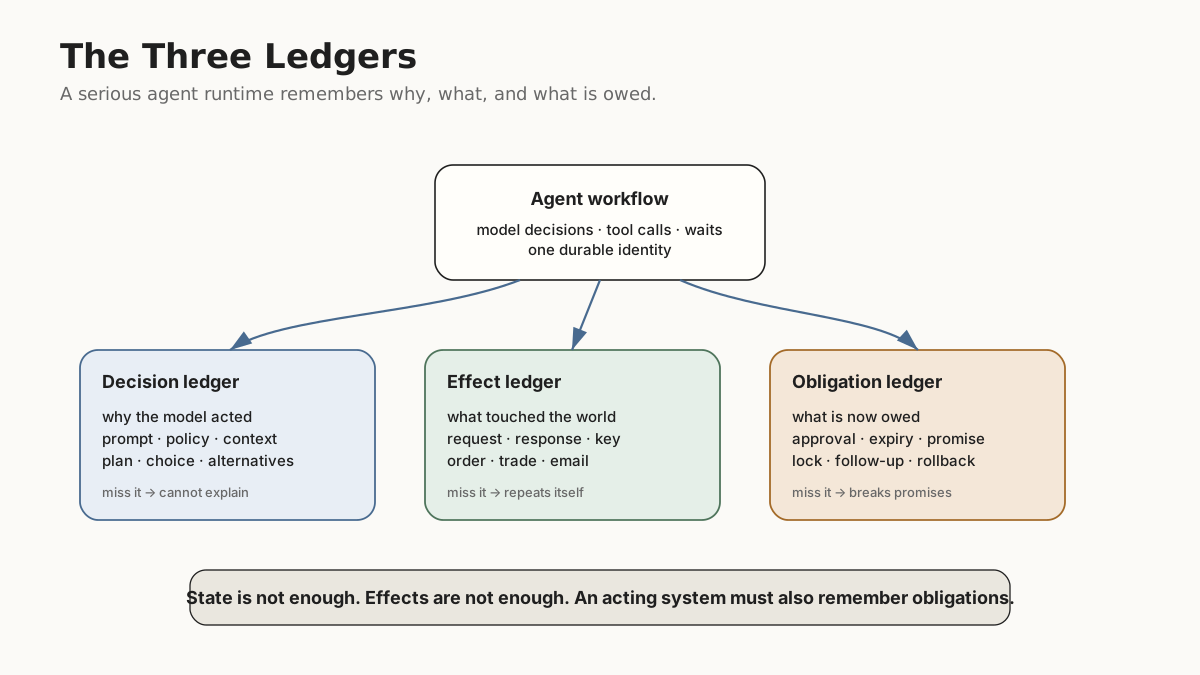
P1 — Three ledgers, one journal. Tape keeps a decision ledger (every
model call: request, response, rationale, policy version), an effect ledger
(every tool call: an idempotency key, a status in {pending, confirmed, failed,
unknown}, the request, the response, the error, a compensation reference), and an
obligation ledger (compensation handles registered alongside confirmed
effects). The three together, ordered by (run_id, seq), are the journal —
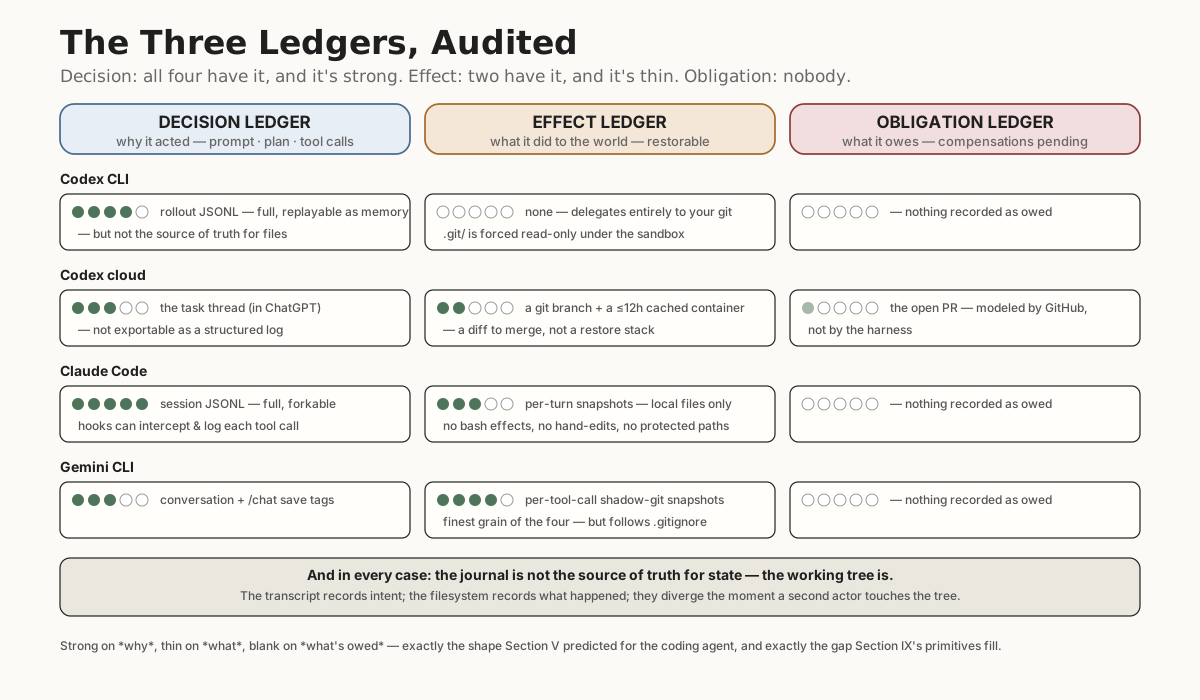
the audit spine the treatise's regulator reads (treatise §III, fig.
03_three_ledgers.svg; §XIII.4, fig.
34_three_ledgers_applied.svg).
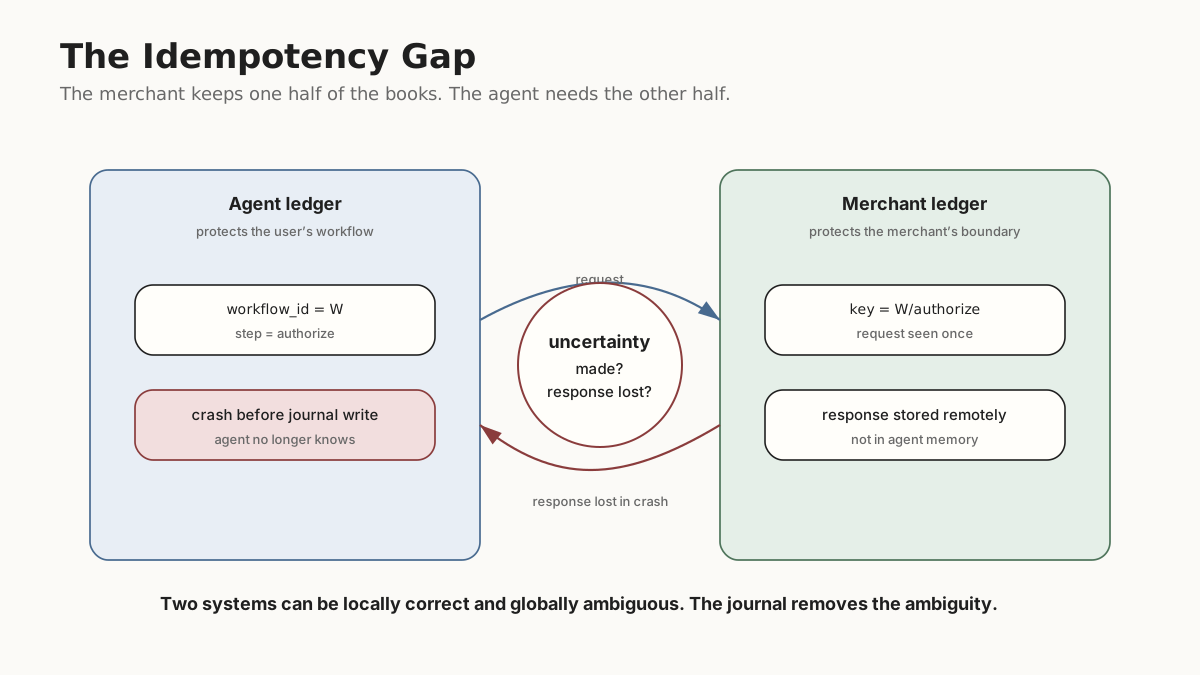
P2 — The idempotency key names the decision. When the model says "wire
£2,000,000 to fund X," that instruction is decision #N in the run. The effect's
idempotency key is run/decision-N/<tool-name> — derived from the journal
entry, not from a hash of the arguments, because the arguments could be
recomputed differently on replay if a prior tool result differed (a late credit
lands, read_balances returns a higher figure, amount changes, a hash of
amount changes, the bank sees a new instruction — two wires). This is treatise
§IX ①, fig. 07_idempotency_gap.svg.
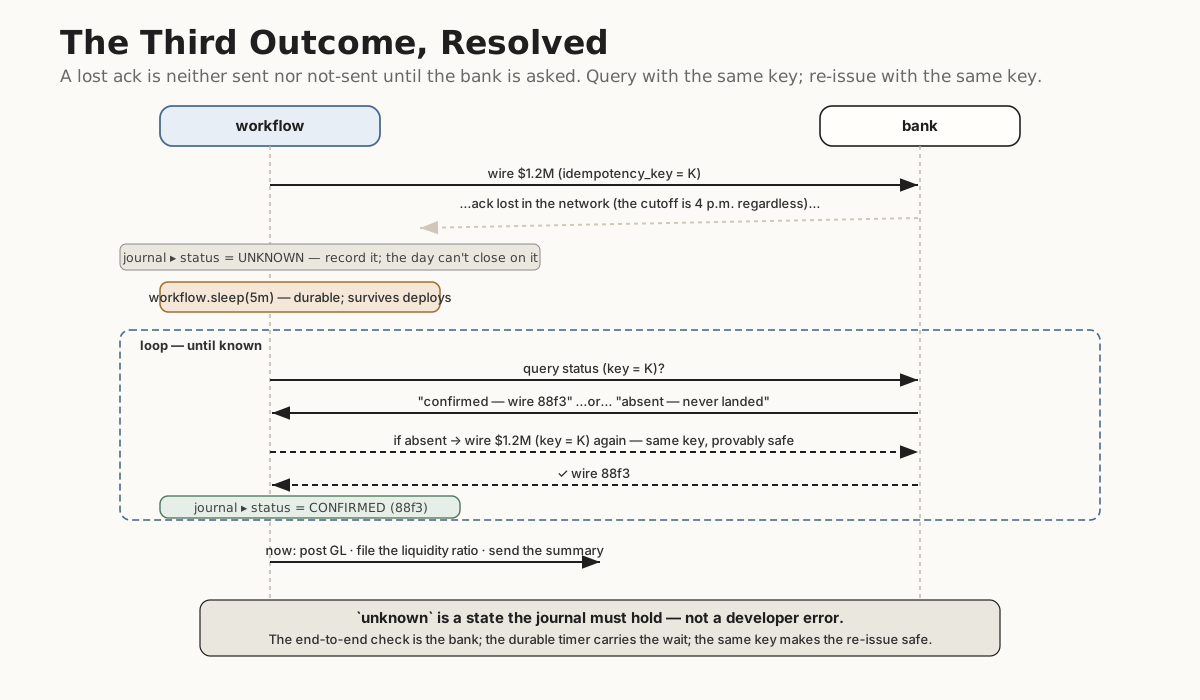
P3 — unknown is a state, not an exception. A tool whose call to a
counterparty timed out after the request may or may not have left, but did not
get an ack, ends in unknown — recorded, run not failed. A reconciler —
calling a per-effect-type status check the SDK registered — resolves it to
confirmed (record the counterparty's result) or absent (re-issue with the
same key) before the run can reach a terminal state or be re-driven past that
point. Treatise §IX ②, fig. 24_unknown_ack.svg.
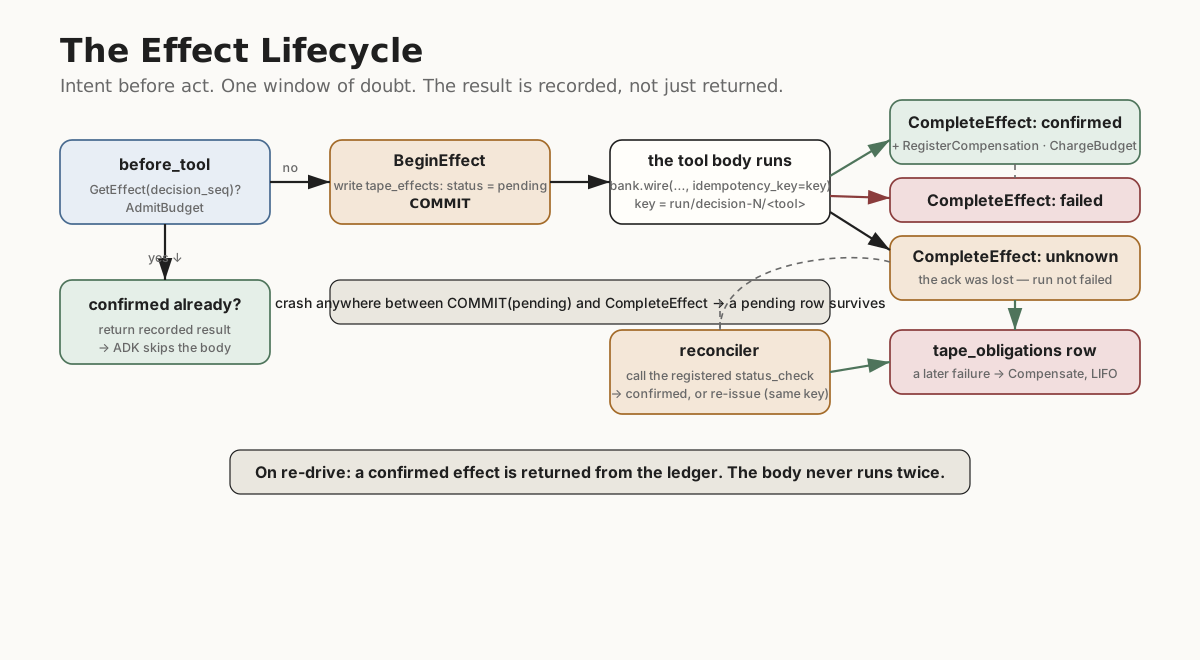
P4 — Intent before effect (the outbox move). Before a tool body runs, Tape
writes the effect row with status=pending and commits it. The body executes
only after the intent is durable. A crash between the intent write and the
outcome write therefore always leaves a pending row — never a silent gap — and
that row is what the reconciler and the re-drive key off.
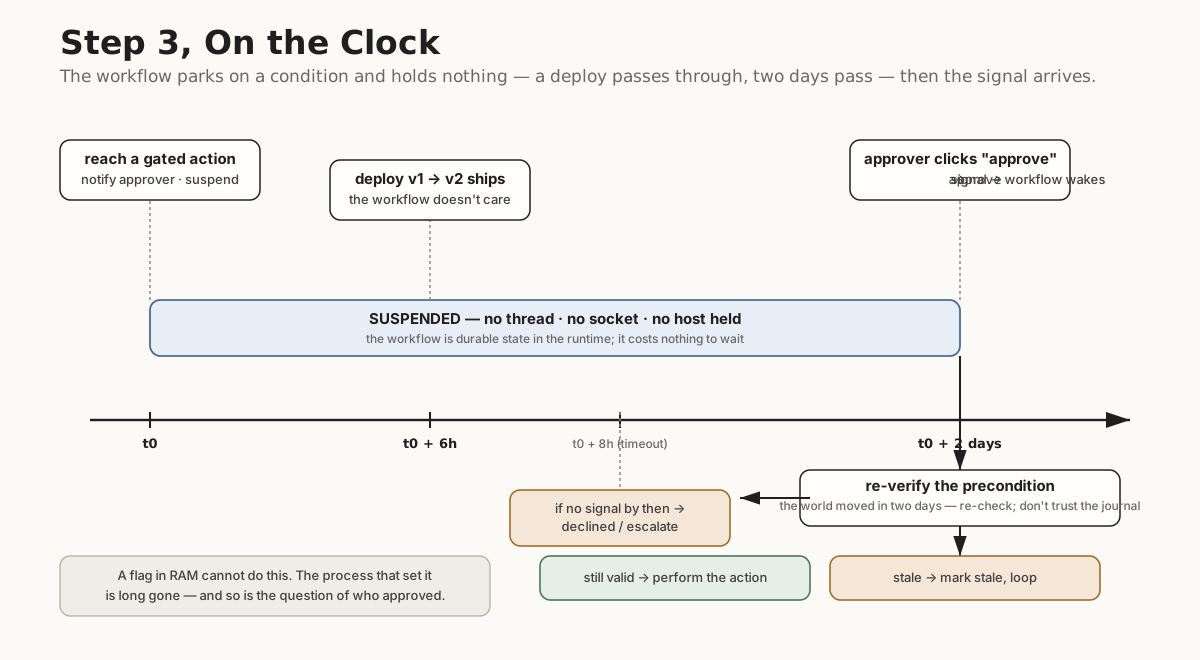
P5 — Gates are durable suspends. A tape.gated(...) action is an ADK
LongRunningFunctionTool: it returns pending, ADK pauses the run, Tape records
status=waiting plus the gate name. The run is now a row in Postgres that says
"run X is waiting on gate G" — it survives any number of deploys. SendSignal
writes the resolution and flips the run to runnable; the recovery loop (or a
webhook) re-invokes the run, ADK's long-running-tool resume protocol injects the
signal payload as the tool's result via append_event, and the run continues.
Treatise §IX ③, fig. 25_human_gate_timeline.svg.
P6 — Budget is run state. Each run has a tape_budget row: usd_cap,
token_cap, usd_spent, tokens_spent. before_model / before_tool calls
AdmitBudget (refuse the step if it would exceed a cap); after_* calls
ChargeBudget, recorded in the same transaction as the decision or effect
record. On resume the spent counters are read back from Postgres — a run that
crashed at $40 of a $50 cap resumes at $40, not $0. Treatise §IX ④.
P7 — Compensation is registered at commit time, run LIFO, and can get stuck.
When an effect with a declared inverse confirms, its compensation handle is
written to tape_obligations in the same transaction. If a later step fails
hard, Compensate walks the obligations newest-first and runs each inverse; a
compensation that succeeds marks its obligation compensated; one that fails
marks it stuck and fires an alert. Tape never reports a false "compensated."
Treatise §IX ⑤, and the loop's coda in §X.
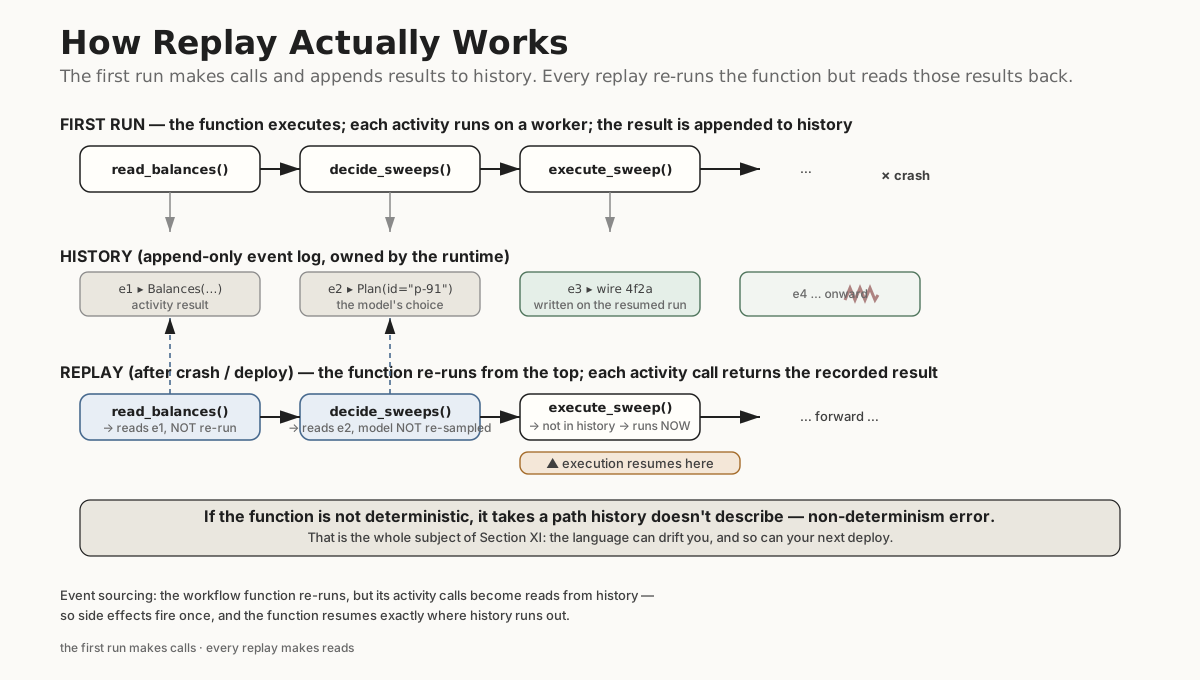
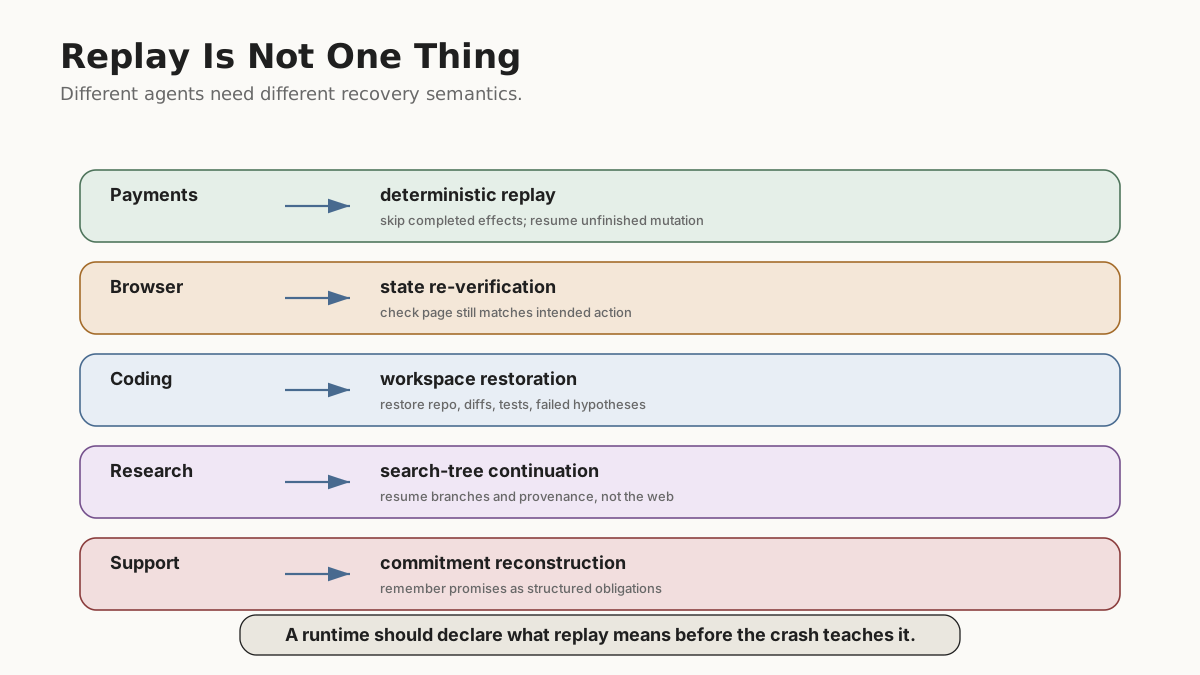
P8 — Replay is memory, not a process image. Tape never snapshots the agent
process. On resume it reconstructs the run: ADK re-reads the session (events +
state dict) from Tape, re-drives the agent, and at each model call Tape returns
the recorded LlmResponse and at each tool call for an already-confirmed effect
Tape returns the recorded result — so the re-drive walks the same trajectory it
walked before, deterministically, until it reaches the first step Tape has no
record of: the resume point. From there everything proceeds for real.
Treatise §VIII "How replay actually works", §X, figs.
23_replay_timeline.svg and
10_replay_semantics.svg.
P9 — Provenance on every event. Because Tape sits on the model-call boundary,
it records — without the developer doing anything — the model id, the request, the
response, and the policy version in state. The rationale argument a tool body
declares (if any) is recorded with the effect. The treasury regulator gets the
why, not just the what. Treatise §IX, the seventh point.
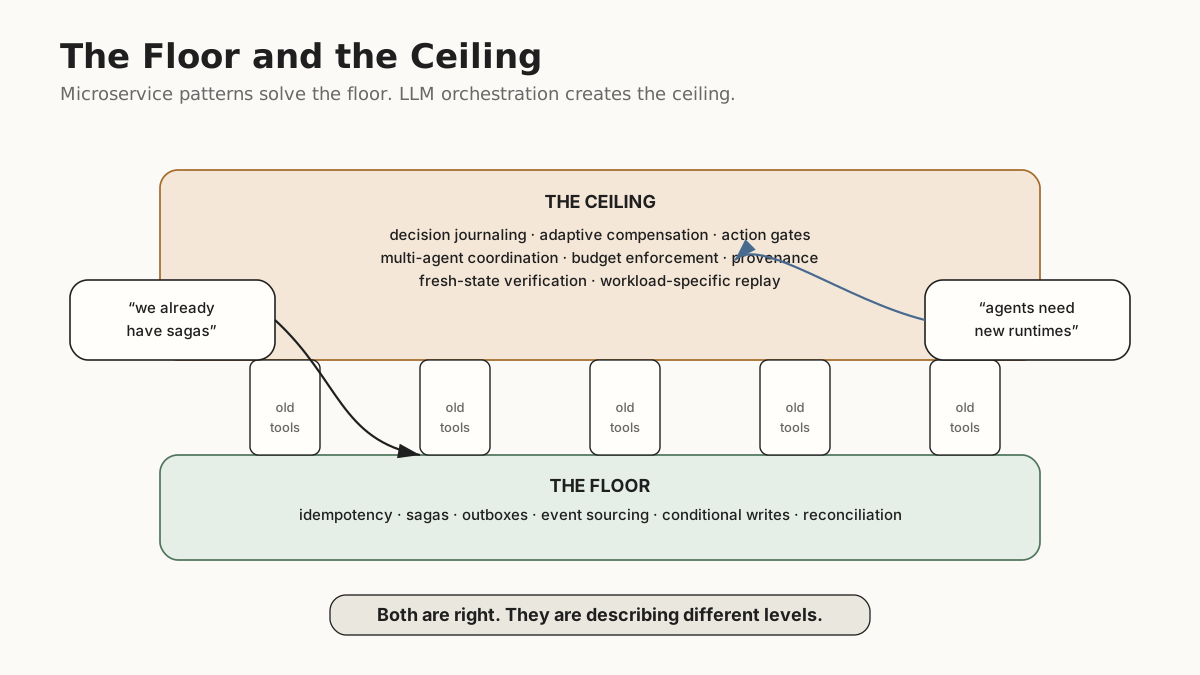
P10 — Plug into the floor. Tape does not reinvent durable storage (Postgres),
counterparty idempotency (it passes through the bank's own idempotency key),
the session/event store (it is an ADK SessionService), or run resumption (it
rides ADK's invocation_id). Treatise §XV "Floor and Ceiling", fig.
04_floor_and_ceiling.svg.
P11 — Determinism is the agent author's contract. Tape can replay the model's
non-determinism (it journals it) but it cannot replay non-determinism in the
agent's own code — a tool body that branches on random() or wall-clock time
will drift on re-drive. This is unenforceable in Python/Java/Go/TS; it is
documented (treatise §X, "anything non-deterministic is a runtime call or an
activity result") and surfaced as a lint in the SDK where it can be.
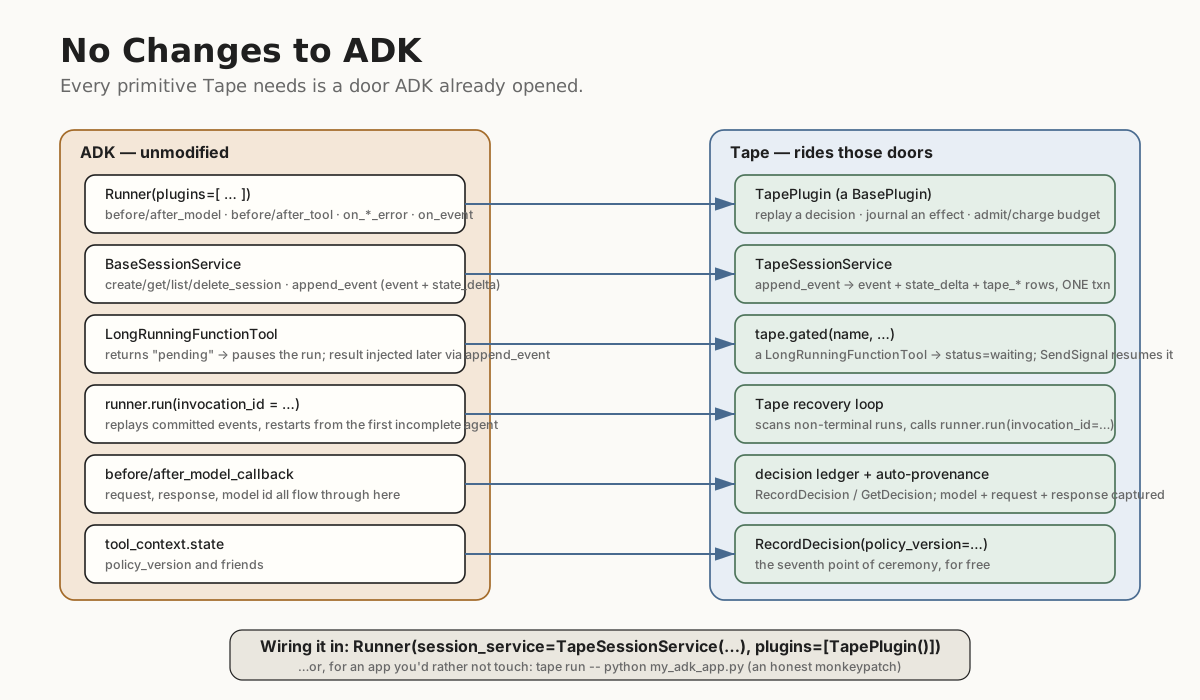
3. Why "no changes to ADK" holds⌗
Everything Tape needs is a door ADK already opened. The mapping:
| Tape primitive | ADK extension point it rides on |
|---|---|
| Record a decision; replay it on re-drive | Plugin.before_model_callback (return a recorded LlmResponse → ADK skips the model call) / after_model_callback (capture the LlmResponse) |
| Journal an effect; skip a confirmed one on re-drive | Plugin.before_tool_callback (return a recorded result dict → ADK skips the tool body) / after_tool_callback (capture the result) / on_tool_error_callback (capture failed / unknown) |
Mirror the conversation (events + state) durably, transactionally with the journal |
a custom BaseSessionService — TapeSessionService — whose append_event writes the ADK Event, applies event.actions.state_delta, and writes the corresponding tape_* rows in one DB transaction |
| Action gate = durable suspend-until-signal | LongRunningFunctionTool (returns pending, pauses the run) + SessionService.append_event to inject the resolution later |
| Budget admit/charge | before_model / before_tool (admit) + after_model / after_tool (charge) |
| Run identity & resumption | ADK's invocation_id (one runner.run() call) + session_id (durable); Tape's run_id keyed to (app_name, user_id, session_id, invocation_id); resume = runner.run(..., invocation_id=stored) against the session TapeSessionService.get_session reconstructs |
| Provenance | what flows through before/after_model_callback (request, response, model id) + tool_context.state (policy version) |
Tape sits beneath ADK, through these doors. There are two integration modes:
- Explicit (recommended) — two lines:
- Zero-touch —
tape run -- python my_adk_app.py. The launcher imports a shim that, at import time, wrapsRunner.__init__to inject the plugin and session service. (This is a monkeypatch; the spec says so plainly. Use it for retrofitting an existing app you don't want to edit; use the explicit form for anything you own.)
Known ADK gaps, documented. (1) Plugin callbacks do not fire for sub-agents
invoked under AgentTool — effects inside such a sub-agent must be journaled via
that inner agent's own callbacks or a wrapper; Tape ships a TapeAgentTool that
does this. (2) ADK's resume is caller-initiated, not automatic — Tape's recovery
loop is the caller (a small process that scans non-terminal runs and re-invokes
them). (3) "Tools may run more than once on resume" — that is exactly what the
effect ledger is for; the before_tool short-circuit is the mechanism that makes
the second run a no-op.
4. Architecture⌗
┌───────────────────────────────────────────────────────────────────────┐
│ product code (the CFO's app, the SRE's runbook, the support desk) │
├───────────────────────────────────────────────────────────────────────┤
│ ADK agent — LlmAgent, FunctionTool, Runner (Python / Java / Go / │
│ TypeScript) │
├───────────────────────────────────────────────────────────────────────┤
│ Tape SDK — TapePlugin · TapeSessionService · @tape.effect · │
│ tape.gated · tape.Budget · TapeClient (gRPC) │
├───────────────────────────────────────────────────────────────────────┤
│ Tape server (Rust · Tokio · Tonic · sqlx) │
│ ┌─────────┬──────────┬──────────┬────────────┬─────────┬─────────┐ │
│ │ Run │ Decision │ Effect │ Obligation │ Gate / │ Budget │ │
│ │ registry│ ledger │ ledger │ ledger │ Signal │ acct. │ │
│ └─────────┴──────────┴──────────┴────────────┴─────────┴─────────┘ │
│ ┌──────────────┬───────────────────┬──────────────────────────────┐ │
│ │ Reconciler │ Recovery loop │ Storage trait (PG · SQLite) │ │
│ └──────────────┴───────────────────┴──────────────────────────────┘ │
├───────────────────────────────────────────────────────────────────────┤
│ Postgres (the journal + the ADK session/event mirror) │
├───────────────────────────────────────────────────────────────────────┤
│ systems of record — the bank, the broker, the GL, the ticketing... │
└───────────────────────────────────────────────────────────────────────┘
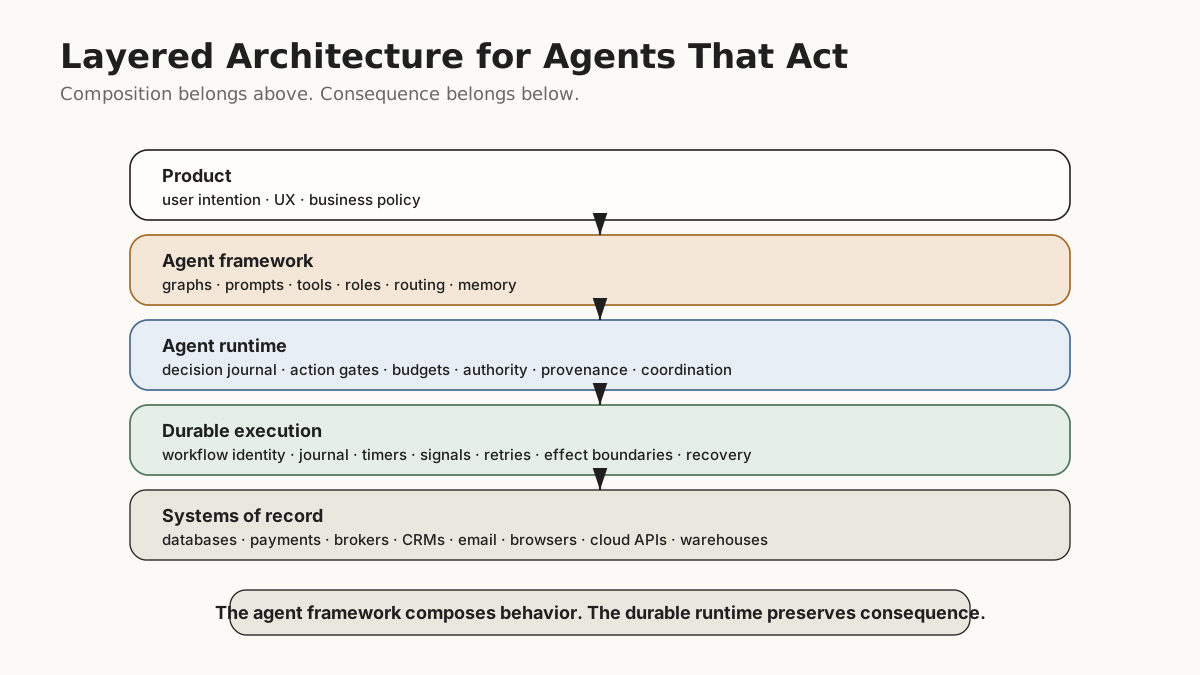
(Mirror of the treatise's 08_architecture_layers.svg;
the Tape-specific version is tape_stack.svg.)
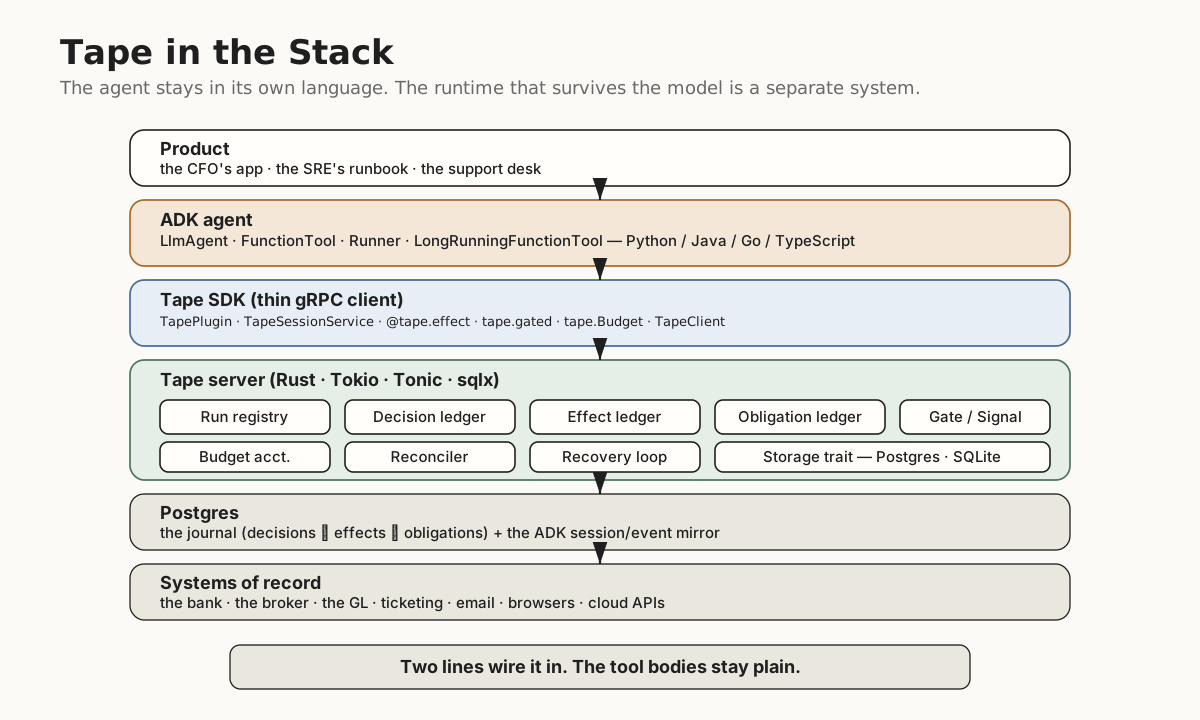
Components.
- Run registry —
tape_runs: one row per(app_name, user_id, session_id, invocation_id), with astatus ∈ {runnable, running, waiting, terminal, failed, compensating, stuck}and a monotonicseqcursor. - Decision ledger —
tape_decisions:(run_id, seq, model, request, response, rationale, policy_version).RecordDecisionappends;GetDecisionreturns decision#seqon re-drive. - Effect ledger —
tape_effects:(run_id, seq, decision_seq, tool_name, idempotency_key UNIQUE, status, request, response, error, compensation_ref).BeginEffectwritespendingand commits, returns the decision-derived key;CompleteEffectwrites the outcome;GetEffectis the re-drive short-circuit. - Obligation ledger —
tape_obligations:(run_id, effect_seq, kind, payload, status ∈ {pending, committed, compensated, stuck}).RegisterCompensationappends;Compensatewalks LIFO. - Gate / Signal manager —
tape_signals:(run_id, name, payload, consumed).AwaitSignalparks the run (status=waiting);SendSignalrecords the payload and flips it torunnable. - Budget accounting —
tape_budget: caps + spent counters.AdmitBudget/ChargeBudget. - Reconciler — a periodic task: for every effect in
pending/unknown, invoke the registered status check; flip toconfirmedor re-issue. - Recovery loop — on startup and on a timer: scan
tape_runsfor rows in{runnable, running}whose lease is stale, or inwaitingwith a consumed signal, and re-invoke them via the SDK's resume entrypoint (runner.run(..., invocation_id=...)). - Storage trait — Postgres for production; SQLite for
tape devand tests. Migrations viasqlx migrate.
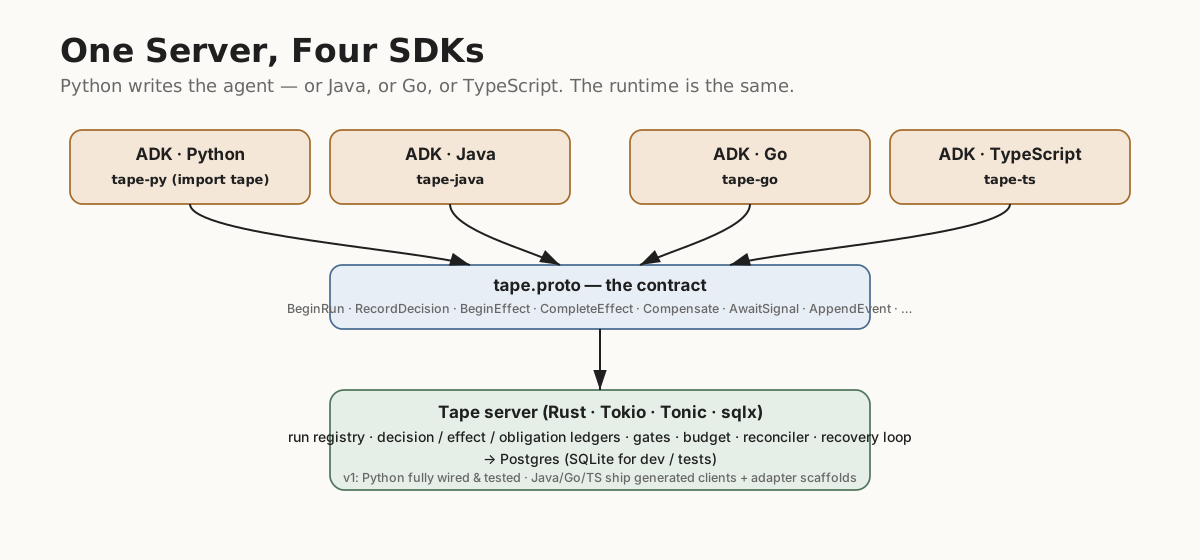
The server is Rust because the runtime that survives the model should be written in something built to survive — high-concurrency (one server fronts many agent processes), low-latency (it's on the model-call and tool-call hot path), crash-safe, with explicit memory. The SDKs are thin gRPC clients; the agent stays in whatever language the team writes agents in. This is the treatise's §XI argument made concrete: "Python will write the agent. Something else will run it."
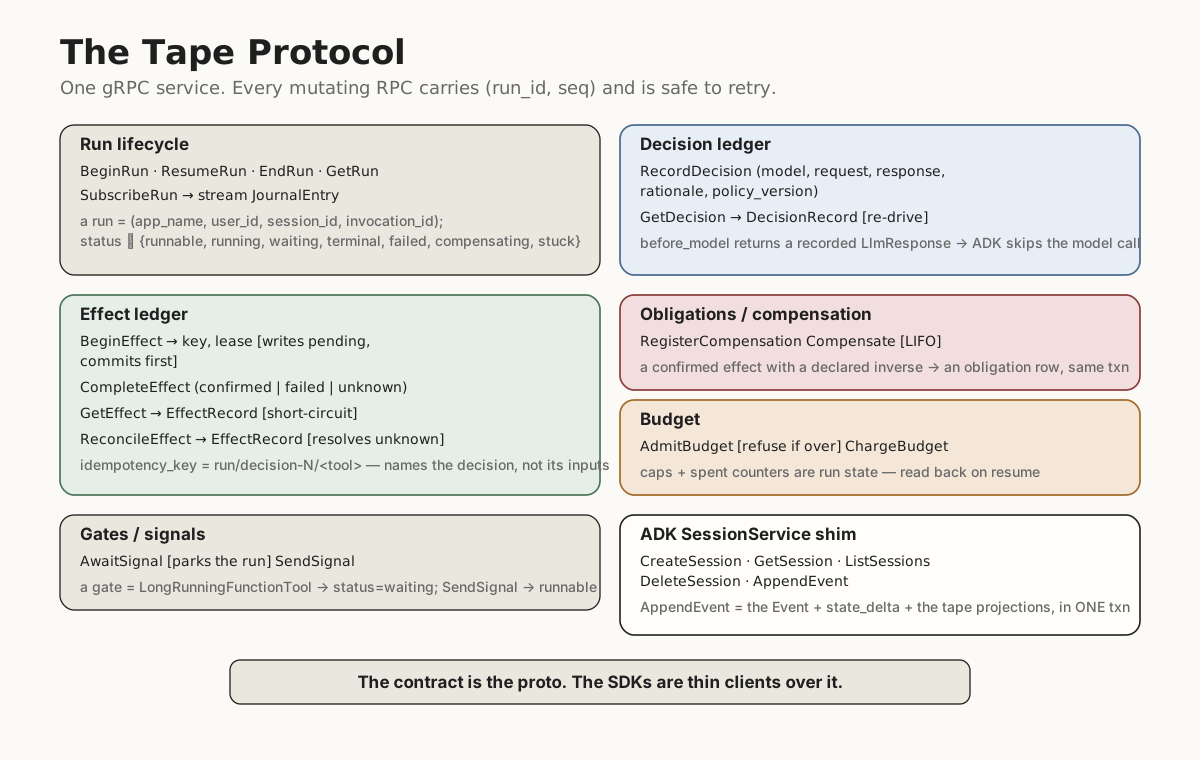
5. The contract — tape.proto⌗
The wire protocol is gRPC. The full definition lives in
tape/proto/tape.proto; the shape:
service Tape {
// ── run lifecycle ───────────────────────────────────────────────────────
rpc BeginRun (BeginRunRequest) returns (BeginRunResponse);
rpc ResumeRun (ResumeRunRequest) returns (ResumeRunResponse);
rpc EndRun (EndRunRequest) returns (EndRunResponse);
rpc GetRun (GetRunRequest) returns (RunState);
rpc SubscribeRun (SubscribeRunRequest) returns (stream JournalEntry);
// ── decision ledger ─────────────────────────────────────────────────────
rpc RecordDecision (RecordDecisionRequest) returns (RecordDecisionResponse);
rpc GetDecision (GetDecisionRequest) returns (DecisionRecord); // re-drive
// ── effect ledger ───────────────────────────────────────────────────────
rpc BeginEffect (BeginEffectRequest) returns (BeginEffectResponse); // writes pending, commits, returns key
rpc CompleteEffect (CompleteEffectRequest) returns (CompleteEffectResponse);
rpc GetEffect (GetEffectRequest) returns (EffectRecord); // re-drive short-circuit
rpc ReconcileEffect (ReconcileEffectRequest) returns (EffectRecord);
// ── obligations / compensation ──────────────────────────────────────────
rpc RegisterCompensation (RegisterCompensationRequest) returns (RegisterCompensationResponse);
rpc Compensate (CompensateRequest) returns (CompensateResponse); // LIFO
// ── budget ──────────────────────────────────────────────────────────────
rpc AdmitBudget (AdmitBudgetRequest) returns (AdmitBudgetResponse); // refuse if over
rpc ChargeBudget (ChargeBudgetRequest) returns (BudgetState);
// ── gates / signals ─────────────────────────────────────────────────────
rpc AwaitSignal (AwaitSignalRequest) returns (AwaitSignalResponse); // parks the run
rpc SendSignal (SendSignalRequest) returns (SendSignalResponse); // resumes it
// ── ADK SessionService shim ─────────────────────────────────────────────
rpc CreateSession (CreateSessionRequest) returns (Session);
rpc GetSession (GetSessionRequest) returns (Session);
rpc ListSessions (ListSessionsRequest) returns (ListSessionsResponse);
rpc DeleteSession (DeleteSessionRequest) returns (DeleteSessionResponse);
rpc AppendEvent (AppendEventRequest) returns (AppendEventResponse); // event + state_delta + tape projections, ONE txn
}
Design notes:
- Every mutating RPC is idempotent. It carries
run_idand aseq(or, forBeginEffect, thedecision_seq); replaying it is a no-op that returns the recorded result. This is what makes the SDK and the recovery loop safe to retry freely. AppendEventis the seam that gives single-transaction atomicity. BecauseTapeSessionServiceroutes ADK'sappend_eventthrough Tape, Tape can wrap "insert theEvent" + "applystate_delta" + "write thetape_decisions/tape_effects/tape_obligationsrow this event corresponds to" + "updatetape_budget" in one Postgres transaction. There is never a moment where the event stream says "tool returned X" and the effect ledger does not know.SubscribeRunstreams the journal (decisions, effects, obligations, gate events, state deltas) inseqorder — for dashboards and live audit.- Streaming is used on the hot paths (
SubscribeRun; batchedRecordDecision/CompleteEffectwhere the SDK pipelines) to keep latency low.
6. Data model⌗
Postgres (SQLite for dev/test via the storage trait). All tables are
append-only except tape_runs, tape_budget, tape_effects.status,
tape_obligations.status, and tape_signals.consumed, which are the explicitly
mutable cursors.
| Table | Columns (abridged) | Role |
|---|---|---|
tape_runs |
run_id PK, app_name, user_id, session_id, invocation_id, status, seq_cursor, lease_owner, lease_expires_at, started_at, ended_at |
the run registry |
tape_events |
run_id, seq, invocation_id, author, branch, content JSONB, actions JSONB, ts |
the ADK Event mirror |
tape_state |
scope ('run'|'user'|'app'), scope_key, key, value JSONB |
the current Session.state |
tape_decisions |
run_id, seq, model, request JSONB, response JSONB, rationale, policy_version |
the decision ledger |
tape_effects |
run_id, seq, decision_seq, tool_name, idempotency_key UNIQUE, status, request JSONB, response JSONB, error JSONB, compensation_ref |
the effect ledger |
tape_obligations |
run_id, effect_seq, kind, payload JSONB, status |
the obligation ledger |
tape_signals |
run_id, name, payload JSONB, consumed, created_at |
gates |
tape_budget |
run_id PK, usd_cap, token_cap, usd_spent, tokens_spent |
budget state |
The journal the regulator reads is the union tape_events ∪ tape_decisions ∪
tape_effects ∪ tape_obligations, ordered by (run_id, seq). History compaction
(for long-lived runs) happens at decision boundaries — the equivalent of
"continue-as-new": fold the prefix into a snapshot row, keep the tail. (v2.)
6.5 Resumability — what state Tape captures, when, where, and how a run is reconstructed⌗
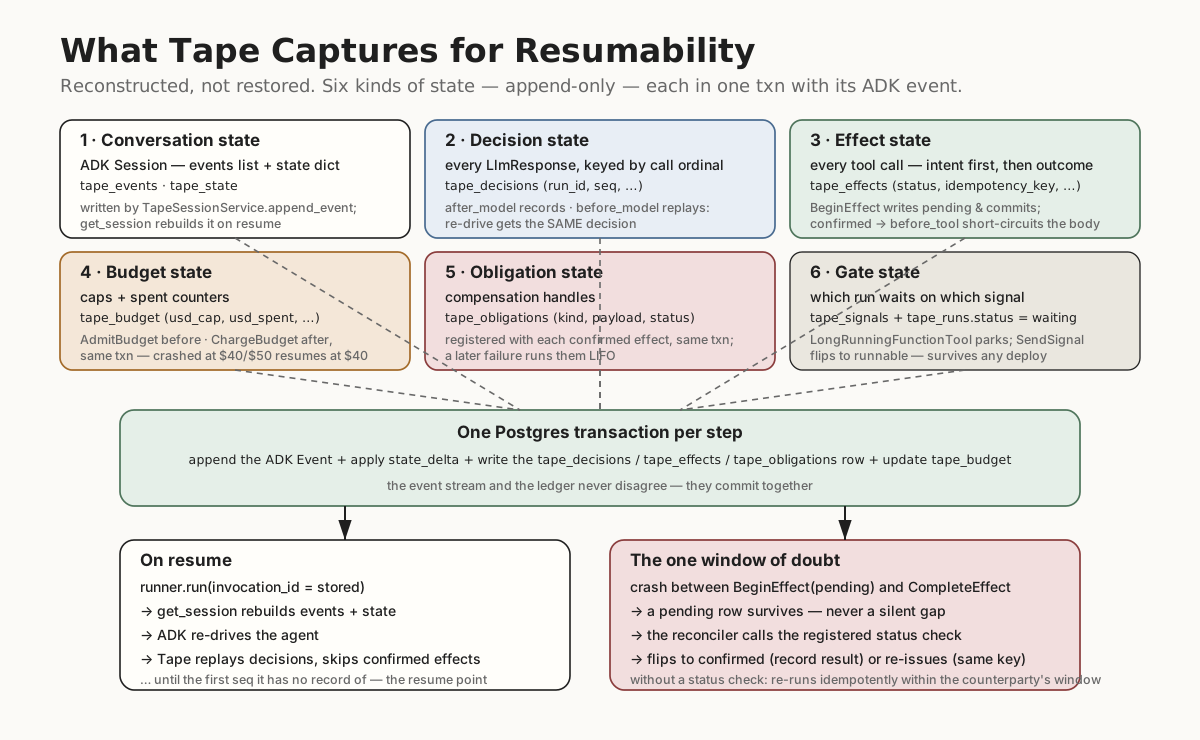
This is the heart of the design. A run is reconstructed, not restored — Tape
never snapshots a process image; it journals enough that re-driving the agent
reaches the same place. Per run, Tape captures six kinds of state,
append-only, each written in one Postgres transaction with the ADK event it
corresponds to (because TapeSessionService routes append_event through
Tape):
- Conversation state — ADK's
Session: itseventslist and itsstatedict (includinguser:/app:prefixes). ADK already persists this viaSessionService.append_event(atomically appends theEventand appliesevent.actions.state_delta); Tape routes it totape_events/tape_state. On resume,get_sessionrebuilds the full history + currentstatefrom Postgres; ADK's own resume machinery (runner.run(..., invocation_id=X)) replays committed events for that invocation and restarts from the first incomplete agent. - Decision state — every model call. The risk: ADK re-calls the LLM on
re-drive → a different decision → a different trajectory. Tape's answer
(Temporal's "LLM-call-as-an-activity," via ADK's model callbacks):
before_model_callbackasks Tape "for this run, is decision#seqrecorded?" — yes → return the recordedLlmResponse(ADK short-circuits, does not call the model, gets the same decision); no → let it proceed, thenafter_model_callbackwrites theLlmResponsetotape_decisionswith a monotonicseq. Position is the ordinal of the model call within the run (DBOS's step-id-by-call-order), not a prompt hash — stable as long as the agent graph re-drives the same way (the P11 caveat). - Effect state — every tool call's intent-before-act and its
outcome.
before_tool_callback→BeginEffect: Tape writes atape_effectsrowstatus=pendingand commits before returning, and hands back the idempotency key derived from the journaled decision (run/decision-N/<tool>, not a hash of the args). If aconfirmedeffect already exists for that key →before_toolreturns the recorded result dict, ADK short-circuits, the body never runs. Ifpendingexists (a prior run started it, then crashed) → the body runs again with the same idempotency key passed to the counterparty so the counterparty dedupes — plug into the floor.after_tool_callback→CompleteEffect(confirmed, result)(+RegisterCompensationif acompensate=was declared);on_tool_error_callback→CompleteEffect(failed)— orunknownif the error signals a lost ack. A crash betweenBeginEffect(pending)andCompleteEffectis the only window where uncertainty lives; the reconciler closes it. - Budget state —
tape_budget.before_*→AdmitBudget(refuse if over);after_*→ChargeBudget, recorded in the same txn as the decision/effect record. On resume the counters are read from Postgres — a run that crashed at $40 of a $50 cap resumes at $40. - Obligation state —
tape_obligations: compensation handles registered alongsideconfirmedeffects, in the same txn. On resume they are intact, so a later failure canCompensateLIFO over exactly the effects that committed. - Gate state —
tape_signals+tape_runs.status. Atape.gatedaction is aLongRunningFunctionToolthat returnspending; Tape recordsstatus=waiting+ the gate name.SendSignalwrites the payload + flips torunnable; the recovery loop (or a webhook) re-invokes the run; ADK's long-running-tool resume injects the payload as the tool's result viaappend_event; the run continues. The state of a multi-day wait is "a row in Postgres saying run X waits on gate G" — it survives any number of deploys.
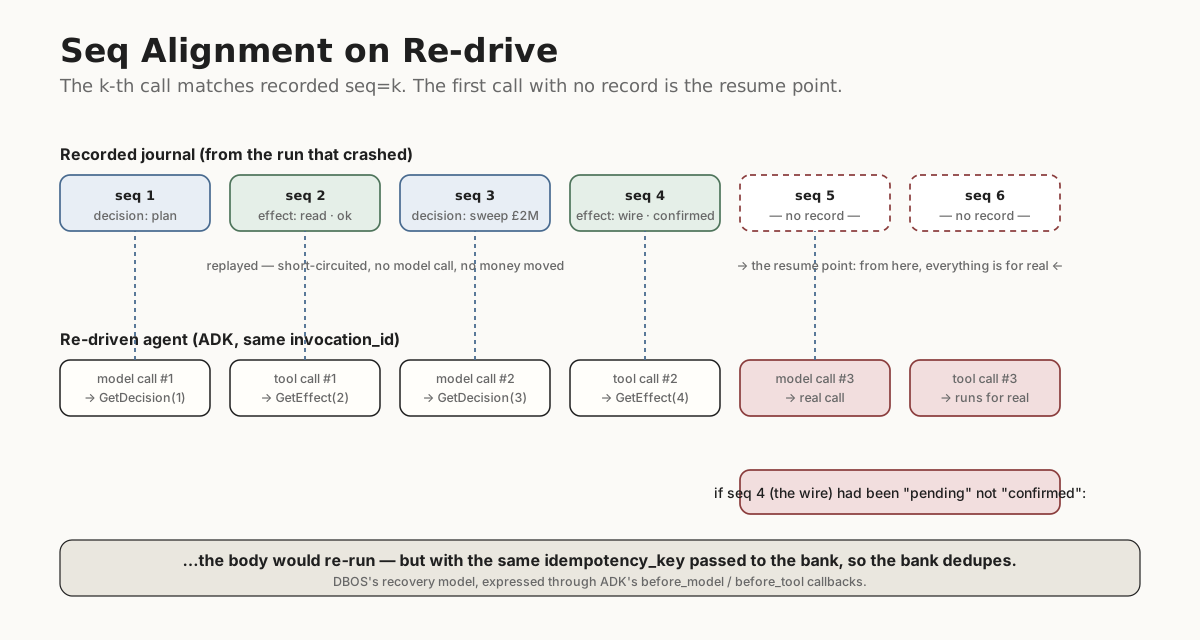
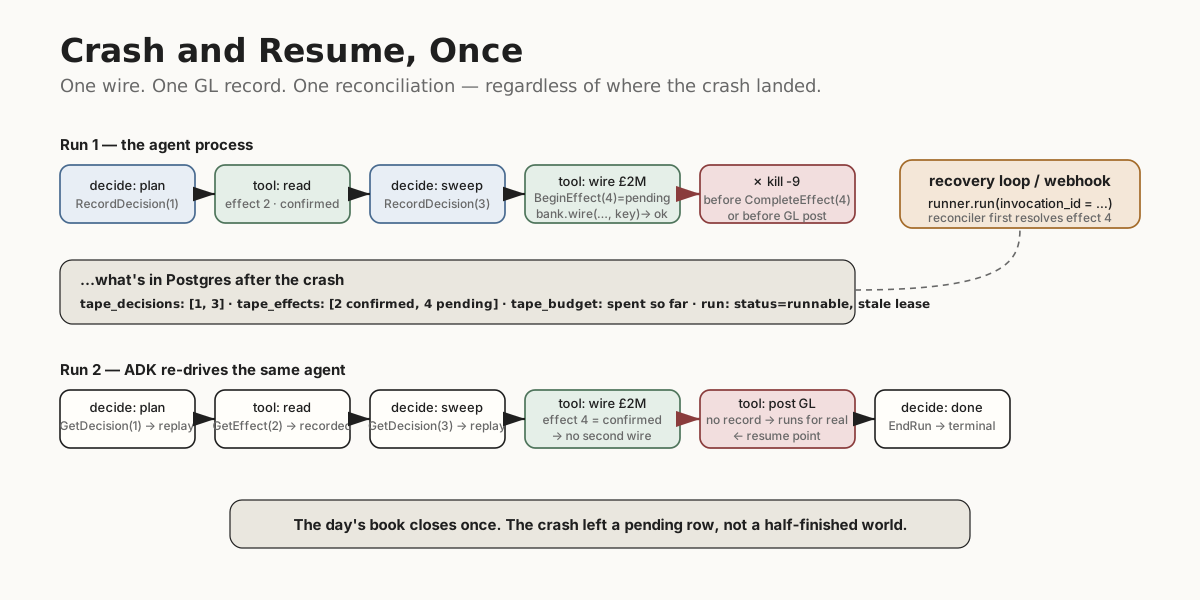
How re-drive finds its place — seq alignment. Two durable anchors compose:
ADK's invocation_id (the handle: resume = runner.run(...,
invocation_id=stored, ...) against the session rebuilt from tape_events) and
Tape's per-run monotonic seq (decisions and effects each get one, by call
order). On re-drive, the kth RecordDecision/BeginEffect call matches
recorded seq=k's outcome (replay the decision; short-circuit the confirmed
effect); the first call for a seq Tape has no record of is exactly the
point the prior run reached — the resume point — and from there everything
proceeds for real. This is DBOS's recovery model, expressed through ADK's
callbacks. (Diagram: tape_seq_alignment.svg.)
The reconciler — resolving unknown. Before re-driving a run with a
pending/unknown effect, and again before a run can reach a terminal state,
Tape's reconciler calls a per-effect-type status check registered by the SDK
(e.g. "ask the bank for the status of idempotency_key=K") and flips
pending/unknown → confirmed (record the counterparty's result) or absent
→ re-issue with the same key. Without a registered status check, a pending
effect re-runs idempotently against the counterparty's own dedup window — still
safe within that window (treatise §IX ④ — "idempotency windows are bounded" — is
the caveat).
What is deliberately NOT captured — process-local memory (Python/JS objects,
the model's context window as a runtime value): resume reconstructs it by
replaying recorded decisions + reading session state; it does not snapshot it.
Untracked external state (a file written outside a tool, a git push via a shell
tool): out of scope — effects must flow through Tape-wrapped tools to be
journaled, and irreversible ones should be tape.gated. Non-deterministic
agent/tool code (P11): cannot be snapshotted; documented, not enforced.
When Tape is NOT the session backend (a user keeps DatabaseSessionService):
Tape falls back to the outbox pattern — TapePlugin writes tape_* rows in
Tape's own DB and a relay reconciles against the session DB; the integrated mode
(Tape as SessionService) is the recommended one and the only one with single-txn
atomicity. Both are supported.
(Diagram: tape_state_capture.svg — the six state
kinds, each written in one txn with its ADK event.)
7. API surface (per SDK)⌗
Python (the reference SDK — tape-py, imported as tape)⌗
import tape
from tape.adk import TapePlugin, TapeSessionService
# 1. the two-line wiring
runner = Runner(
agent=agent, app_name="treasury",
session_service=TapeSessionService("tape://localhost:7878"),
plugins=[TapePlugin()],
)
# 2. a tool body stays plain; a decorator declares the inverse + (optionally) a status check
@tape.effect(compensate=reverse_wire, status_check=bank.wire_status)
def execute_sweep(account_id: str, amount_minor: int, target_mmf: str,
rationale: str, tool_context) -> dict:
key = tape.idempotency_key(tool_context) # = run/decision-N/execute_sweep
return {"wire_id": bank.wire(account_id, amount_minor, target_mmf, idempotency_key=key)}
# 3. a gate is one call
async def request_cfo_approval(amount_minor: int, tool_context) -> dict:
return await tape.gated("cfo-approval", risk="irreversible",
payload={"amount_minor": amount_minor}, tool_context=tool_context)
# 4. budget is run config
runner.run(..., run_config=tape.with_budget(usd_cap=50, token_cap=2_000_000))
# 5. signal a waiting run from anywhere (a webhook, a CLI, another service)
tape.send_signal(run_id, "cfo-approval", {"approved": True, "by": "cfo@acme.com"})
# 6. resume helper (the recovery loop uses this; you can too)
tape.resume(invocation_id) # ≅ runner.run(..., invocation_id=invocation_id)
# 7. raw client when you need it
client = tape.TapeClient("tape://localhost:7878")
TapePlugin is a BasePlugin: its before_model_callback short-circuits a
recorded decision, after_model_callback records one (and charges tokens);
before_tool_callback short-circuits a confirmed effect and runs BeginEffect
otherwise (and admits budget), after_tool_callback runs CompleteEffect +
RegisterCompensation, on_tool_error_callback records failed/unknown.
@tape.effect(...) is optional sugar — without it, TapePlugin still journals
every tool call as an effect with the default decision-derived key; you add the
decorator when you want to declare a compensate= inverse or a status_check= or
a custom key_from=.
TypeScript / Go / Java (tape-ts, tape-go, tape-java)⌗
Each ships: (a) the generated TapeClient from tape.proto — fully working,
connects to the same server, round-trips every RPC; (b) an ADK adapter
scaffold (TapePlugin + TapeSessionService for that language's ADK port)
that mirrors the Python one, with the callback-wiring left as a clearly-marked
TODO for v1. The protocol is the contract; finishing the adapters is mechanical
and tracked per-language.
8. Worked example — the treasury agent, Tape-backed⌗
The full example is in tape/examples/treasury/.
The shape of it, side by side with the treatise's "before":
Before (treatise §II "#### ADK") — execute_sweep is ~25 lines of
hand-rolled ceremony across a tool body, a before_tool_callback, and
tool_context.state.
After (Tape):
# agent.py
import tape
from google.adk.agents import LlmAgent
from google.adk.tools import FunctionTool
def reverse_wire(wire_id: str, account_id: str, **_) -> dict:
return {"reversal_id": bank.reverse(wire_id)}
@tape.effect(compensate=reverse_wire, status_check=bank.wire_status)
def execute_sweep(account_id: str, amount_minor: int, target_mmf: str,
rationale: str, tool_context) -> dict:
key = tape.idempotency_key(tool_context)
return {"wire_id": bank.wire(account_id, amount_minor, target_mmf, idempotency_key=key)}
@tape.effect(compensate=reverse_hedge, status_check=broker.order_status)
def execute_hedge(notional_minor: int, instrument: str, rationale: str, tool_context) -> dict:
key = tape.idempotency_key(tool_context)
return {"order_id": broker.place(instrument, notional_minor, idempotency_key=key)}
@tape.effect() # GL post is its own inverse-free record
def post_gl(entries: list, rationale: str, tool_context) -> dict:
key = tape.idempotency_key(tool_context)
return {"batch_id": gl.post(entries, idempotency_key=key)}
agent = LlmAgent(
model="gemini-2.5-pro",
instruction="Apply the CFO policy in session.state to today's positions.",
tools=[FunctionTool(execute_sweep), FunctionTool(execute_hedge), FunctionTool(post_gl)],
)
# run.py
from google.adk.runners import Runner
from tape.adk import TapePlugin, TapeSessionService
import tape
runner = Runner(agent=agent, app_name="treasury",
                session_service=TapeSessionService("tape://localhost:7878"),
                plugins=[TapePlugin()])
for event in runner.run(user_id="cfo", session_id="2026-05-11",
new_message="Close the book for today.",
run_config=tape.with_budget(usd_cap=50, token_cap=2_000_000)):
...
The tool bodies are plain. The decorator names the inverse. The plugin records
every decision, journals every effect with a decision-derived key, admits and
charges the budget, registers the compensations, and — on a crash and re-invoke —
replays the decisions and short-circuits the confirmed effects so the day's book
closes once. The example's bank / broker / gl are injectable fakes with
"lose the ack" and "crash here" hooks so the kill-and-resume demo is
deterministic (see §10).
9. Scope & non-goals⌗
v1 (this spec). One Tape server, Postgres-backed (SQLite for dev/test).
Python + ADK fully wired and tested end to end. TS/Go/Java SDKs: generated
clients + smoke tests + adapter scaffolds. Primitives ①–⑤ of the treatise's
ceiling. Recovery via ADK invocation_id re-drive, driven by Tape's recovery
loop. Provenance captured automatically.
Out of scope (v2 or never).
- Multi-agent coordination as a journaled entity (treatise §IX ⑥, the
Restate-virtual-object shape) — a
TapeEntityRPC group; v2. v1 coordinates the simple way: sharedtape_statekeys. - Alternative backends behind the same protocol — a Temporal or Restate
engine underneath
tape.proto; v2. - Multi-region. v2.
- Language-level determinism enforcement — impossible in the agent languages; documented as a rule (P11), linted where feasible, not enforced.
- A general-purpose workflow DSL. Tape is purpose-built for agent runs and rides ADK's loop; it does not replace it.
- History compaction beyond the decision-boundary snapshot sketch in §6.
10. Open problems⌗
| Problem | Where it bites | How Tape handles it (and what's left) |
|---|---|---|
| "Tools may run >1× on resume" (ADK) | every effect on every re-drive | the effect ledger + the before_tool short-circuit; verify the short-circuit return path behaves as documented across ADK versions |
| Replaying the model call so the re-drive gets the same decision | every decision on every re-drive | the before_model/after_model short-circuit; verify LlmResponse round-trips losslessly through Tape's JSONB |
| Replay drift from non-deterministic tool code | a tool that branches on random()/clock |
unenforceable; documented (P11), linted where possible |
tape_* history growth |
long-lived sessions | decision-boundary snapshots (continue-as-new) — sketched, not built (v2) |
The AgentTool plugin-callback gap |
effects inside a sub-agent run under AgentTool |
TapeAgentTool wrapper journals via the inner agent's own callbacks; document the limitation prominently |
| Reconciler needs a per-integration status check | true exactly-once on a given counterparty | the SDK's status_check= hook; without it, falls back to the counterparty's own idempotency window (bounded — treatise §IX ④) |
| Clock skew between Tape's lease and a slow agent process | a still-running run looks crashed | leases are renewed by the SDK on every RPC; the recovery loop only re-drives on a stale lease and no in-flight RPC |
11. Diagrams⌗
New figures for this spec live alongside the treatise's, in design-principles/,
in the treatise house style (tape_*.svg):
| File | What it shows |
|---|---|
tape_stack.svg |
the layered stack with Tape inserted beneath ADK |
tape_protocol.svg |
the tape.proto RPC surface, grouped by ledger |
tape_state_capture.svg |
the six state kinds, each written in one txn with its ADK event — what gets written, when, where |
tape_seq_alignment.svg |
the re-drive's RecordDecision/BeginEffect call stream matching the recorded seq stream until the first gap = the resume point |
tape_effect_lifecycle.svg |
BeginEffect → write pending (commit) → act → CompleteEffect{confirmed|failed|unknown} → RegisterCompensation; the resume short-circuit when already confirmed |
tape_adk_wiring.svg |
"no changes" — TapePlugin + TapeSessionService + LongRunningFunctionTool hooked into Runner / SessionService / tools |
tape_resume.svg |
crash → ADK re-drives via invocation_id → Tape replays decisions + short-circuits confirmed effects + reconciler resolves a pending/unknown → run completes once |
tape_languages.svg |
one Tape server, four SDKs, the proto contract in the middle |
tape_before_after.svg |
the 7-point ceremony vs the @tape.effect decorator |
12. Pluggable stores and horizontal scaling⌗
The store is chosen by URL at deploy time — that is the whole "wiring". The
server reads TAPE_STORE (or --store), parses the scheme, builds the matching
store, migrates it, serves. Nothing above the server moves: the gRPC contract,
the SDKs, the agents are all unaffected.
TAPE_STORE |
backend | use |
|---|---|---|
sqlite:./tape.db |
file-backed SQLite (pooled, WAL) | the default; single-node, dev, small prod |
sqlite::memory: / memory |
ephemeral in-process SQLite | tests, demos |
postgres://user:pass@host:5432/db |
pooled PostgreSQL | production / horizontally scalable |
alloydb://user:pass@host:5432/db |
AlloyDB (PostgreSQL-wire-compatible) — run the AlloyDB Auth Proxy and point at 127.0.0.1:5432, or a private-IP host |
production / Google-managed Postgres at scale |
bigtable://project/instance/table |
Cloud Bigtable (BIGTABLE_EMULATOR_HOST honoured) |
very-high-scale / GCP-native (see "the async substrate" below) |
Architecturally, Tape's logical operations — begin a run, record a decision,
begin/complete an effect, register a compensation, charge a budget, append an
event, … — are a trait, RunStore; everything else is plumbing. The SQL
backends (SqlRunStore over a SqlBackend — pooled rusqlite for SQLite,
pooled postgres for PostgreSQL and AlloyDB, which is wire-compatible)
share one set of portable SQL written once. A non-SQL backend implements the
same RunStore: the Cloud Bigtable backend (tape/server/src/store/bigtable.rs)
maps every operation onto single-row atomic mutations, with the per-run seq
held on the run row and bumped read-then-write (single-writer per run is
guaranteed by the lease, so no compare-and-swap is needed — Bigtable's
ReadModifyWriteRow would be tidier but the data-plane client crate doesn't
expose it; CheckAndMutateRow is available if you do need a conditional
mutation). Two Bigtable facts of life are documented and accepted there: the
table and its column family m must exist before startup (Bigtable requires
explicit table creation, like creating a Postgres database —
cbt createtable tape && cbt createfamily tape m && cbt setgcpolicy tape m maxversions=1),
and the AppendEvent two-write (the session row, then the event row) isn't a
single transaction (Bigtable has no cross-row transactions) — a crash between
leaves the state applied without its event, which the re-drive re-creates
idempotently. BIGTABLE_EMULATOR_HOST is honoured, so bigtable://demo/demo/tape
runs against the local emulator; the integration test
(tape/tests/test_bigtable.py) drives the treasury kill-and-resume scenario
against it — one wire, one GL batch, regardless of where the crash landed —
exactly the SQLite/Postgres test, against Bigtable.
Horizontal scaling. With a network store (Postgres), the Tape server is
stateless between requests — so you run N replicas behind a load balancer
and scale freely (kubectl scale deploy/tape --replicas=N, an HPA, docker
compose up --scale tape-server=N; see tape/deploy/k8s/tape.yaml and
tape/docker-compose.yml). Three properties make that safe with no extra
coordination:
- The lease.
tape_runscarrieslease_owner+lease_expires_at_ms.BeginRun/ResumeRuntake the lease with a conditionalUPDATE; the recovery loop only re-drives a run whose lease is stale. So "one driver per run at a time" holds across replicas — and if a replica dies mid-drive, the lease expires and another picks it up. - Idempotent RPCs. Every mutating RPC carries
(run_id, seq)(or the decision-derived effect key) and a replay returns the recorded row. So even if two recovery workers race and both re-drive a run, the loser short-circuits — no double wire, no double GL record. (This is the same property that makes the re-drive safe; it's reused here for free.) - Single-step writes commit independently. Each journal step is its own
committed write (intent-before-effect is just an
INSERTthat commits before the tool runs); the only multi-row transaction isAppendEvent(the ADK event + the session state delta), which theStore::txmethod does in one transaction on whichever backend.
The lease is the only coordination primitive, and it lives in the store, not in the server — so the servers don't talk to each other.
The journal is the WAL — reactors, timers, and the cross-run feed⌗
Every mutating operation appends a tape_journal row before its effect is
observable — so the journal is the write-ahead log, and what hangs off it is a
fan-out of reactors: components that watch the WAL and react. Three ship in
the box (tape/sdk/python/tape/reactors.py; run them with tape-reactors
--runner-from my_app:build_runner or tape.reactors.run_reactors(runner=…)),
and they're all idempotent — the lease + replay properties make a double-run
harmless — so you run as many copies behind a load balancer as you like:
- the recovery reactor — re-drives RUNNABLE runs, RUNNING runs whose lease is
stale, and WAITING runs whose gate was signalled (
recover_once/ theListRunsToRecoverRPC); - the reconciler reactor — for every UNKNOWN effect (and, optionally, every
long-PENDING one), calls the per-tool status check registered via
@tape.effect(status_check=…)and resolves the effect to CONFIRMED or FAILED (reconcile_once/ListPendingEffects); - the timer reactor — fires due timers (
SetTimer/CancelTimer/ListDueTimers, claimed atomically so a peer reactor won't re-fire): built-in kindsgate_timeout(release a parked run with a timeout resolution),redrive(re-invoke a run),reconcile(resolve a specific effect), plus your own via a callback. Timers are atape_timersrow in the store — the durable "wake me at time T" the delayed reactors and gate timeouts need.
And SubscribeEvents is the cross-run WAL tail — journal entries since a
timestamp, optionally filtered to one run / one kind — which run_event_fanout(url,
sink) streams to a sink you wire to Pub/Sub / Kafka / a webhook, so the WAL
can leave the system entirely. On the SQL backends the tail is a (ts, run_id,
seq)-ordered query; on Bigtable a cross-run time-ordered tail isn't expressible
against the row-key layout — there you let Bigtable change streams be the CDC
source (consumed via Dataflow's BigtableChangeStreamsToPubSub template or the
ReadChangeStream API; see docs.cloud.google.com/bigtable/docs/change-streams-overview),
and the per-run SubscribeRun feed still works.
Deploying onto a managed agent runtime (Vertex AI Agent Engine). Agent
Engine runs your ADK App in a managed, autoscaled service you don't get to add
sidecars to — so the client of Tape runs there (deploy the App with
plugins=[TapePlugin("tapes://…")], session_service=TapeSessionService("tapes://…"),
resumability_config=ResumabilityConfig(is_resumable=True), tape-py in
requirements, TAPE_URL in env_vars), while the Tape server and the
reactors are separate services — by definition, the parts that must outlive
the agent process. The Tape server is a Cloud Run service (--use-http2,
internal ingress, min-instances ≥ 1) backed by AlloyDB (the AlloyDB Auth Proxy
as a Cloud Run sidecar — TAPE_STORE=postgres://…@127.0.0.1:5432/…) or Bigtable
(bigtable://…, the service account's IAM); the tapes://host URL scheme makes
the SDK open a TLS channel and attach a Google ID token (ADC) for the Cloud Run
audience, so the agent's service account just needs roles/run.invoker. The
reactors are a small Cloud Run service that bundles your agent package (for the
@tape.effect(status_check=…) registrations) and runs
tape.reactors.run_reactors(redrive_fn=…) — its redrive_fn re-invokes a
stalled run through the Agent Engine :streamQuery API rather than a local
runner.run_async (the recovery reactor by definition runs when the agent
isn't, so it can't reach into Agent Engine's runtime — it pokes the API). The
worked manifests are in tape/deploy/gcp/ (and tape/deploy/k8s/ for
self-managed Kubernetes, where the reactor can be a literal sidecar container
in the agent's pod).
tape.proto stays the contract (these are additive RPCs); the RunStore trait
is where a backend implements them. Still on the v2 list: a transactional-outbox
EventLog (a tape_outbox row written in the same txn, a relay → Pub/Sub — for
exactly-once-effective publish without the at-least-once-with-idempotent-consumers
tradeoff the WAL tail accepts), Cloud Tasks as the timer backend at scale (the
managed swap for the tape_timers table + the polling timer reactor — not
required, but it removes the poller and gives exact-time delivery), and an
grpc.aio SDK that awaits Tape (sync only on the floor — BeginEffect,
AdmitBudget — async and batched everywhere else).
13. Relationship to the treatise, in one table⌗
| Treatise | This spec |
|---|---|
| §I "answer vs act" | Tape is for agents that act — the journal is for the act, not the answer |
| §II the four-framework treasury walk; "#### ADK" | §1 (the "before"), §8 (the "after") |
| §III three commitments / three ledgers | P1 — decision / effect / obligation ledgers (§4, §6) |
| §VI "the idempotent-API defence" | P2 (decision-named keys), the reconciler (P3) |
| §VII "the reactive defence" | P5 (gates as durable suspends, not polled flags) |
| §VIII "what the new layer actually does" + "how replay actually works" | §3 (the ADK wiring), §6.5 (resumability), P8 |
| §IX six primitives of the ceiling | ①②③④⑤ are v1 (this spec); ⑥ is v2 |
| §X "the loop, made durable" | §6.5 — re-drive + seq alignment is that loop, expressed through ADK |
| §XI "on substrate" | §4 — the server is Rust, the agent stays in its own language |
| §XII "the landscape" | §9 non-goals (Temporal/Restate backends behind tape.proto — v2) |
| §XIII coding harnesses as proto-journals | the design target: turn the proto-journal into a real one |
| §XIV "what this treatise is glossing over" | §10 open problems, P11 |
| §XV "floor and ceiling" | P10 — plug into the floor (Postgres, ADK sessions, counterparty keys), build the ceiling |