Phase Transitions Deep Dive
How phases, state, extraction, and background agents interact in a live voice session. This guide covers timing, data flow, and common pitfalls with visual diagrams.
The Turn-Complete Pipeline
Section titled “The Turn-Complete Pipeline”Every model response ends with a TurnComplete event from the Gemini Live
API. This triggers a pipeline on the control lane:
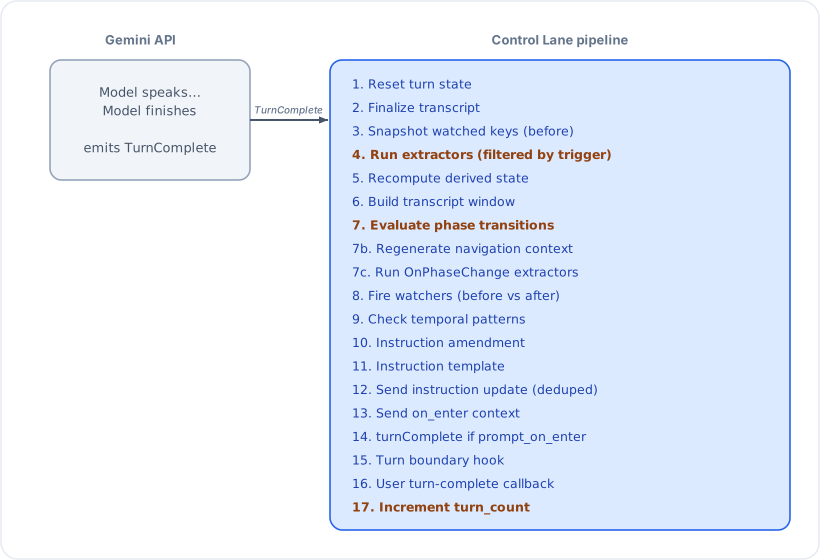
Key insight: extractors (step 4) run BEFORE transitions (step 7). This means freshly extracted state is available for transition guards. Turn count is incremented LAST (step 17), so guards see the current turn number, not the next one.
Extraction triggers: Step 4 filters extractors by their trigger mode.
EveryTurn extractors always run, except that an LlmExtractor skips a
turn the caller said nothing in. Interval(n) extractors only run every
N turns. AfterToolCall and OnPhaseChange extractors are skipped here
and fire at their respective points (after tool dispatch and step 7c).
Navigation context: Step 7b always regenerates the navigation context
(stored in session:navigation_context), even if no transition fired. This
keeps the model’s awareness of its position in the phase graph up to date.
Phases using .navigation() will include this context in the instruction.
State Flow: Conversation to Transition
Section titled “State Flow: Conversation to Transition”Data flows through the system in one direction per turn cycle:
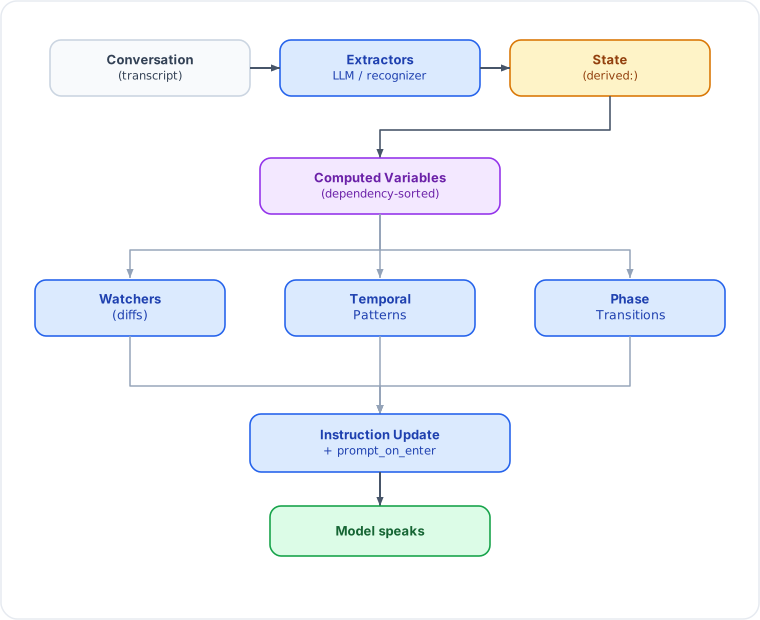
When Do Transitions Fire?
Section titled “When Do Transitions Fire?”Transitions fire at step 7 of the turn-complete pipeline. By this point, all extractors have run and computed variables have been recalculated.
Timeline of a Typical Turn
Section titled “Timeline of a Typical Turn”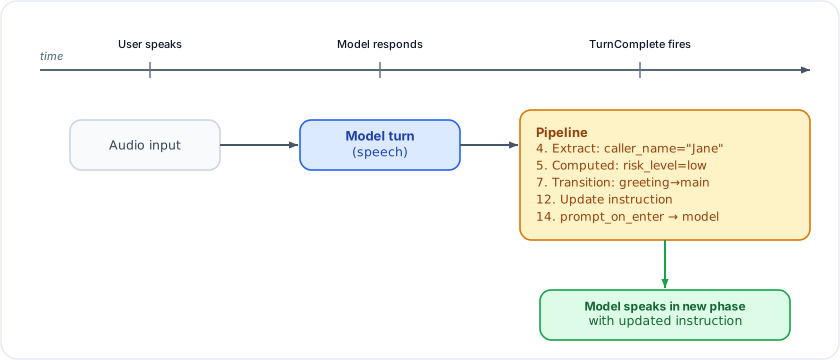
Transition Guards: What Works, What Doesn’t
Section titled “Transition Guards: What Works, What Doesn’t”Good: State-dependent guards
Section titled “Good: State-dependent guards”These wait for real data from the conversation:
// Wait for extraction to populate caller_name.transition("identify", |s| s.get::<String>("caller_name").is_some())
// Wait for a boolean flag from tool execution.transition("negotiate", S::is_true("debt_acknowledged"))
// Wait for one of several values.transition("payment", S::one_of("intent", &["full_pay", "partial_pay"]))
Bad: Unconditional guards
Section titled “Bad: Unconditional guards”// BUG: fires on the FIRST turn_complete — before user speaks!.transition("next_phase", |_s| true)Why this breaks:
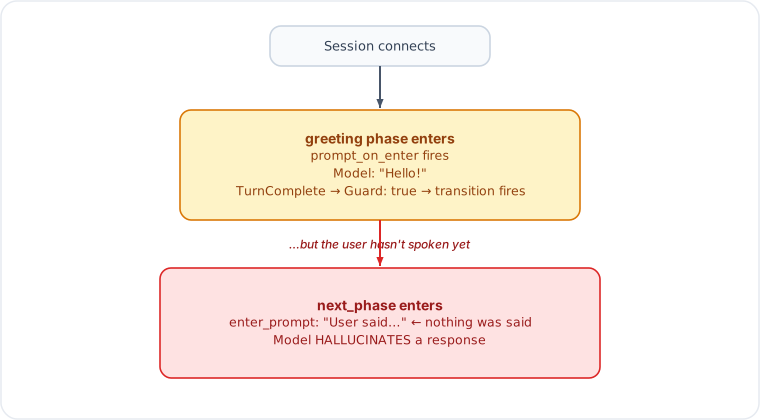
Fix: Turn-count guards for greeting phases
Section titled “Fix: Turn-count guards for greeting phases”.phase("greeting") .instruction("Welcome the caller.") .transition("identify", |s| { // Turn 0 = prompt_on_enter (no user input yet) // Turn 1 = greeting model response // Turn 2+ = user has spoken at least once let tc: u32 = s.session().get("turn_count").unwrap_or(0); tc >= 2 }) .done()Better: Combine turn count with state check
Section titled “Better: Combine turn count with state check”.transition("identify", |s| { let tc: u32 = s.session().get("turn_count").unwrap_or(0); let has_name = s.get::<String>("caller_name").is_some(); tc >= 2 || has_name // user spoke, or extraction already got the name})enter_prompt: How It Works
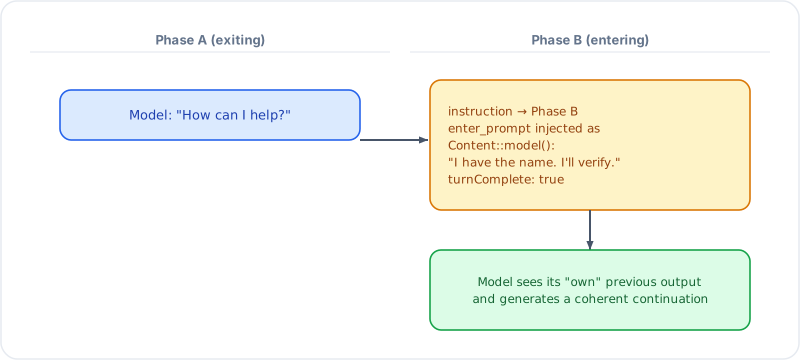
Section titled “enter_prompt: How It Works”enter_prompt injects a Content::model() message when entering a phase.
This appears in the conversation as the model’s own previous speech, giving
it continuity across the phase boundary.
Pitfall: False context in enter_prompt
Section titled “Pitfall: False context in enter_prompt”// BAD: claims something that hasn't happened.enter_prompt("The caller has responded with their name and reason.")
// GOOD: states the agent's intent (doesn't assert facts about the user).enter_prompt("I'll now verify the caller's identity.")
// BEST: state-aware prompt that reflects actual state.enter_prompt_fn(|state, _tw| { let name: String = state.get("caller_name").unwrap_or_default(); format!("The caller identified as {name}. I'll check our records.")})Phase Transition + Extraction Interplay
Section titled “Phase Transition + Extraction Interplay”The most common pattern: extractors populate state, transitions check it.
  Turn 1: User says "Hi, I'm Jane Smith from Acme Corp"  ─────────────────────────────────────────────────────
  Model responds: "Hello Jane! How can I help?"
  TurnComplete fires:    Step 4 ─ LlmExtractor runs ──> caller_name="Jane Smith"                                    caller_org="Acme Corp"                                    intent="unknown"
    Step 5 ─ Computed vars ──────> is_known_contact=true (lookup)
    Step 7 ─ Transitions:             greeting guard: caller_name.is_some() ── true!             ──> transition to identify_purpose
    Step 12 ─ Instruction update: "Ask Jane why she's calling"    Step 14 ─ prompt_on_enter ──> model speaks in new phase
What happens when extraction fails
Section titled “What happens when extraction fails” Turn 1: User says "Hi, I'm Jane Smith" ─────────────────────────────────────────
TurnComplete fires: Step 4 ─ LlmExtractor FAILS (401 auth error) ──> on_extraction_error callback fires ──> NO state written
Step 7 ─ Transitions: greeting guard: caller_name.is_some() ── false ──> NO transition, stays in greeting
Model continues in greeting phase (correct behavior)This is why state-dependent guards are self-healing: if extraction fails, the guard simply doesn’t fire, and the conversation stays in the current phase until extraction succeeds.
Phase-Scoped Tool Filtering
Section titled “Phase-Scoped Tool Filtering”Each phase can restrict which tools the model may call. The processor rejects calls to tools not in the phase’s list.
Phase: greeting Phase: determine_purpose ┌──────────────────────┐ ┌──────────────────────────┐ │ tools: [ │ │ tools: [ │ │ "check_contact" │ │ "check_calendar" │ │ ] │ │ "check_availability" │ │ │ │ ] │ │ Model calls │ │ │ │ "check_calendar" ──X │ │ Model calls │ │ REJECTED (not in │ │ "check_calendar" ──✓ │ │ phase tools) │ │ ALLOWED │ └──────────────────────┘ └──────────────────────────┘If a phase omits .tools(), ALL registered tools are available.
Why tools become “unreachable”
Section titled “Why tools become “unreachable”” greeting ──(needs caller_name)──> determine_purpose │ check_calendar is ONLY here
If extraction fails: caller_name never set determine_purpose never reached check_calendar never available Model says "I can't check the calendar"Fix: ensure extraction works (auth, schema), or make critical tools available in multiple phases.
Callback Modes: Blocking vs Concurrent
Section titled “Callback Modes: Blocking vs Concurrent”Control-lane callbacks support two execution modes:
  Blocking (default)              Concurrent  ──────────────────              ──────────
  Event ──> callback ──> await    Event ──> tokio::spawn(callback)            (blocks)     done               (fire-and-forget)                          │                       │                     next event              next event                                          (immediately)
When to use each
Section titled “When to use each”| Use Case | Mode | Why |
|---|---|---|
| State mutation | Blocking | Next event needs the state |
| Tool response | Blocking (forced) | Return value IS the response |
| Logging | Concurrent | Don’t block the pipeline |
| Analytics webhook | Concurrent | Fire and forget |
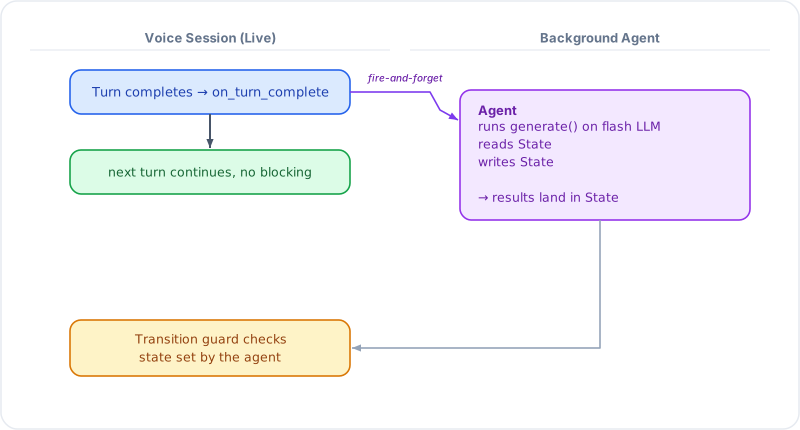
| Background agent | Concurrent | Long-running, don’t block |
| Error notification | Concurrent | Non-critical side effect |
L2 API
Section titled “L2 API”Live::builder() // Blocking (default) — awaited inline .on_turn_complete(|| async { update_dashboard().await; })
// Concurrent — spawned, doesn't block pipeline .on_turn_complete_concurrent(|| async { log_to_cloud().await; })
// Concurrent error/lifecycle callbacks .on_error_concurrent(|msg| async move { webhook(&msg).await; }) .on_disconnected_concurrent(|reason| async move { cleanup(reason).await; }) .on_extracted_concurrent(|name, val| async move { broadcast(name, val).await; })Forced-blocking callbacks (no concurrent variant)
Section titled “Forced-blocking callbacks (no concurrent variant)”| Callback | Why forced blocking |
|---|---|
on_tool_call |
Return value IS the tool response |
on_interrupted |
Must clear state before audio resumes |
before_tool_response |
Transforms data in the pipeline |
on_turn_boundary |
Content injection must complete first |
Background Agent Dispatch
Section titled “Background Agent Dispatch”Fire-and-forget agent execution from callbacks. The agent runs independently while the voice conversation continues.
Using BackgroundAgentDispatcher
Section titled “Using BackgroundAgentDispatcher”use gemini_adk_rs::live::BackgroundAgentDispatcher;
let bg_dispatcher = BackgroundAgentDispatcher::new();
let handle = Live::builder() .on_extracted_concurrent({ let bg = bg_dispatcher.clone(); let llm = flash_llm.clone(); move |name, value| { let bg = bg.clone(); let llm = llm.clone(); async move { if name == "CallerState" { // Dispatch a background agent to analyze the caller let analyzer = AgentBuilder::new("caller_analyzer") .instruction("Analyze caller risk profile") .build(llm)?; bg.dispatch("analyze_caller", analyzer, state.clone()); } } } }) .connect(config).await?;Using agent_tool for synchronous agent dispatch
Section titled “Using agent_tool for synchronous agent dispatch”When the model needs to wait for the agent’s result:
let verifier = AgentBuilder::new("verifier")    .instruction("Verify caller identity against database")    .build(llm.clone())?;
Live::builder()    .agent_tool("verify_identity", "Verify caller", verifier)    .phase("verify")        .tools(vec!["verify_identity".into()])        .transition("main", S::is_true("identity_verified"))        .done()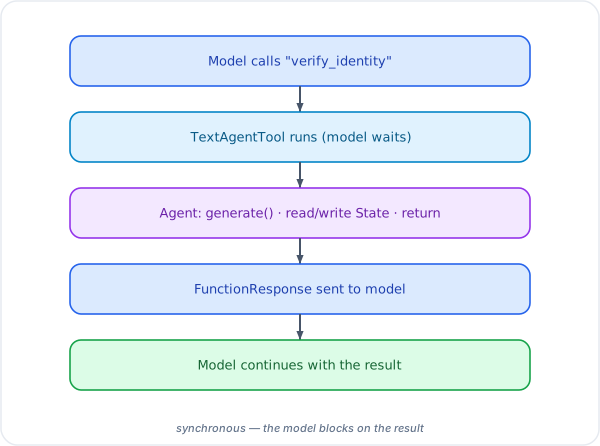
Background Tool Execution (Zero Dead Air)
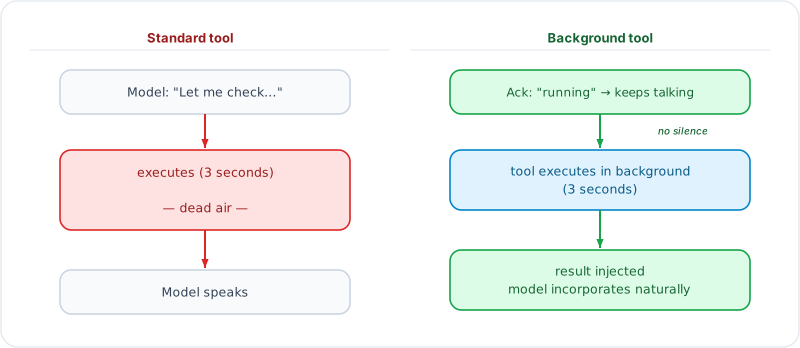
Section titled “Background Tool Execution (Zero Dead Air)”For tools that take seconds (DB queries, API calls, agent pipelines), background execution eliminates silence in voice sessions:
L2 API
Section titled “L2 API”Live::builder() .dispatcher(dispatcher) .tool_background("search_knowledge_base") .tool_background_with_formatter("analyze_doc", Arc::new(VerboseFormatter)) .connect_vertex(project, location, token) .await?;Complete Example: Call Screening Pipeline
Section titled “Complete Example: Call Screening Pipeline”A 7-phase call screening system showing how all the pieces fit together:
┌─────────────────────────────────────────────────────────┐ │ SESSION START │ │ Extraction LLM: gemini-2.5-flash (VertexAI) │ │ Live model: gemini-2.0-flash-live (VertexAI) │ │ Transcription: input + output enabled │ └────────────────────────┬────────────────────────────────┘ │ ▼ ┌─────────────────────────────────────────────────────────┐ │ PHASE: greeting │ │ Tools: [check_contact_list] │ │ Guard: tc >= 2 (user must speak before transitioning) │ │ │ │ Model: "Hello, you've reached Alex Rivera's office." │ │ User: "Hi, I'm Jane Smith from Marketing." │ │ │ │ TurnComplete: │ │ Extract: caller_name="Jane Smith" │ │ Extract: caller_org="Marketing" │ │ Computed: is_known → check_contact_list │ │ Watcher: is_known_contact=true fires │ │ Guard: tc=2 → transition! │ └────────────────────────┬────────────────────────────────┘ │ ▼ ┌─────────────────────────────────────────────────────────┐ │ PHASE: identify_caller │ │ Tools: [check_contact_list] │ │ enter_prompt: "Ask for full name and organization." │ │ │ │ Guard: caller_name.is_some() → determine_purpose │ │ Guard: tc >= 3 && name.is_none() → take_message │ └────────────────────────┬────────────────────────────────┘ │ (caller_name already set) ▼ ┌─────────────────────────────────────────────────────────┐ │ PHASE: determine_purpose │ │ Tools: [check_calendar] ← NOW AVAILABLE │ │ │ │ Model: "How can I help you today?" │ │ User: "I need to discuss the Q3 budget." │ │ │ │ TurnComplete: │ │ Extract: call_purpose="Q3 budget discussion" │ │ Extract: urgency=0.5 │ │ Guard: call_purpose.is_some() → screen_decision │ └────────────────────────┬────────────────────────────────┘ │ ▼ ┌─────────────────────────────────────────────────────────┐ │ PHASE: screen_decision │ │ Tools: [transfer_call, take_message, block_caller] │ │ Computed: screen_recommendation = "transfer" │ │ (known contact → auto-transfer) │ │ │ │ Guard: is_known || urgency > 0.8 → transfer │ │ Guard: caller_blocked → farewell │ │ Guard: !known && urgency <= 0.8 → take_message │ └────────────────────────┬────────────────────────────────┘ │ (known contact) ▼ ┌─────────────────────────────────────────────────────────┐ │ PHASE: transfer │ │ Tools: [transfer_call] │ │ Model calls transfer_call → state: call_transferred │ │ Guard: call_transferred → farewell │ └────────────────────────┬────────────────────────────────┘ │ ▼ ┌─────────────────────────────────────────────────────────┐ │ PHASE: farewell (terminal) │ │ Model: "I'm connecting you now. Have a great call!" │ └─────────────────────────────────────────────────────────┘Reactive overlays running in parallel
Section titled “Reactive overlays running in parallel” Watchers (fire on state diffs): ───────────────────────────────────────────────── urgency_level crossed_above(0.8) → alert UI is_known_contact became_true → prioritize call caller_sentiment changed_to("hostile") → show warning
Temporal patterns (fire on sustained conditions): ───────────────────────────────────────────────── caller impatient for 20s → inject de-escalation prompt screening stalled 4 turns → suggest taking a message
Computed variables (recalculate on dependency change): ───────────────────────────────────────────────── screen_recommendation = f(is_known, urgency, sentiment)Design Rules for Phase Transitions
Section titled “Design Rules for Phase Transitions”1. Greeting phases need turn-count guards
Section titled “1. Greeting phases need turn-count guards”The greeting is model-initiated. The first TurnComplete is the greeting
itself, not a user response. Always gate on tc >= 2:
.phase("greeting") .instruction("Welcome the caller.") .transition("next", |s| { s.session().get::<u32>("turn_count").unwrap_or(0) >= 2 }) .done()2. Use state-dependent guards, not unconditional ones
Section titled “2. Use state-dependent guards, not unconditional ones”// BAD: fires immediately, before any meaningful state exists.transition("next", |_| true)
// GOOD: waits for real data.transition("next", S::is_true("disclosure_given")).transition("next", |s| s.get::<String>("caller_name").is_some())3. Order transitions from specific to general
Section titled “3. Order transitions from specific to general”Guards are evaluated in order. First match wins:
.phase("screening") // Most specific: hostile caller → decline immediately .transition("farewell", |s| { s.get::<String>("sentiment").as_deref() == Some("hostile") }) // Specific: known contact or urgent → transfer .transition("transfer", |s| { s.get::<bool>("is_known").unwrap_or(false) || s.get::<f64>("urgency").unwrap_or(0.0) > 0.8 }) // General: unknown, not urgent → take message .transition("take_message", |s| { s.get::<String>("call_purpose").is_some() }) .done()4. Use phase guards for prerequisite enforcement
Section titled “4. Use phase guards for prerequisite enforcement”.phase("negotiate") // Cannot enter until identity is verified .guard(S::is_true("identity_verified")) .instruction("Negotiate a payment plan.") .done()If a transition guard fires but the target’s phase guard fails, the machine skips it and evaluates the next transition.
5. enter_prompt should state intent, not assert facts
Section titled “5. enter_prompt should state intent, not assert facts”// BAD: asserts something about the user that may be false.enter_prompt("The caller provided their details and reason for calling.")
// GOOD: states the agent's intent (always true).enter_prompt("I'll now verify the caller's identity.")
// BEST: state-aware, reflects actual extracted data.enter_prompt_fn(|state, _tw| { let name: String = state.get("caller_name").unwrap_or("the caller".into()); format!("I'll verify {name}'s identity now.")})6. Make transitions resilient to extraction failure
Section titled “6. Make transitions resilient to extraction failure”If extraction fails (network error, 401, malformed response), no state is written. Your transition guards should handle this gracefully:
// Self-healing: if extraction fails, guard stays false, no transition.transition("next_phase", |s| s.get::<String>("caller_name").is_some())
// Fallback: if stuck too long, offer an alternative.transition("take_message", |s| {    let tc: u32 = s.session().get("turn_count").unwrap_or(0);    let name: Option<String> = s.get("caller_name");    tc >= 5 && name.is_none()  // 5 turns without a name → give up})
7. Use concurrent callbacks for fire-and-forget work
Section titled “7. Use concurrent callbacks for fire-and-forget work”// BAD: blocks the pipeline for a webhook call.on_extracted(|name, val| async move { slow_webhook(&name, &val).await; // 500ms blocks next event!})
// GOOD: fire-and-forget, pipeline continues immediately.on_extracted_concurrent(|name, val| async move { slow_webhook(&name, &val).await; // runs in background})Debugging Phase Transitions
Section titled “Debugging Phase Transitions”Enable tracing
Section titled “Enable tracing”// In your main.rs or app setuptracing_subscriber::fmt() .with_env_filter("gemini_adk_rs::live::processor=debug") .init();Key log lines to watch
Section titled “Key log lines to watch”DEBUG processor: Phase transition: greeting -> identify_callerDEBUG processor: Instruction updated (123 chars)DEBUG processor: Extractor "CallerState" produced 5 fieldsWARN processor: Extraction failed: LLM request failed: API error 401DEBUG processor: Turn 3 complete, turn_count=3Common symptoms and causes
Section titled “Common symptoms and causes”| Symptom | Likely Cause |
|---|---|
| Model hallucinates user input | Unconditional transition + misleading enter_prompt |
| Phase never transitions | Extraction failing (check on_extraction_error) |
| “Tool not available” | Tool scoped to unreachable phase |
| Model repeats itself | No transition guard matches (stuck in phase) |
| Callback blocks pipeline | Blocking callback doing slow I/O (use _concurrent) |
See also
Section titled “See also”- Phase System — phase definitions, guards, lifecycle callbacks, and tool filtering
- Steering Modes — how phase instructions are delivered (
ContextInjectionvsInstructionUpdate) - State Watchers — watcher patterns that complement phase transitions
- cookbook 24 — customer support